![[PREVIEW] Remothered: Red Nun’s Legacy – Ambitious Survival Horror That Needs More Polish](https://www.indie-games.eu/wp-content/uploads/2026/09/Remothered-Red-Nuns-Legacy-4-1024x576.jpg)
[PREVIEW] Remothered: Red Nun’s Legacy – Ambitious Survival Horror That Needs More Polish
Remothered: Red Nun’s Legacy has a gripping atmosphere and promising survival tools, but its repetitive hiding and rough visuals need…

![[PREVIEW] Tiny Metal 2 – Strategy Game That Wants You to Learn From Every Mistake](https://www.indie-games.eu/wp-content/uploads/2026/09/Tiny-Metal-2.jpg)
If you enjoy independent indie game coverage, consider supporting Indie-Games.eu on Patreon. It helps keep the site independent.
I rarely enjoy discovering that my opening strategy was completely wrong, but Tiny Metal 2 made that process one of the most interesting parts of its recent playtest. Choosing an unsuitable unit, ignoring an important facility or concentrating my forces in the wrong place never felt like the game was punishing me without explanation. Each mistake revealed something useful about how its battlefield works.
That surprised me because Tiny Metal 2 initially looks like a fairly approachable turn-based strategy game. Its controls are simple, its colourful units are easy to move around the grid and the basic objective of capturing territory will be immediately familiar to anyone who has played Advance Wars. However, my time with the recent Steam playtest, primarily spent fighting CPU commanders, quickly showed that there is much more happening beneath that accessible appearance.
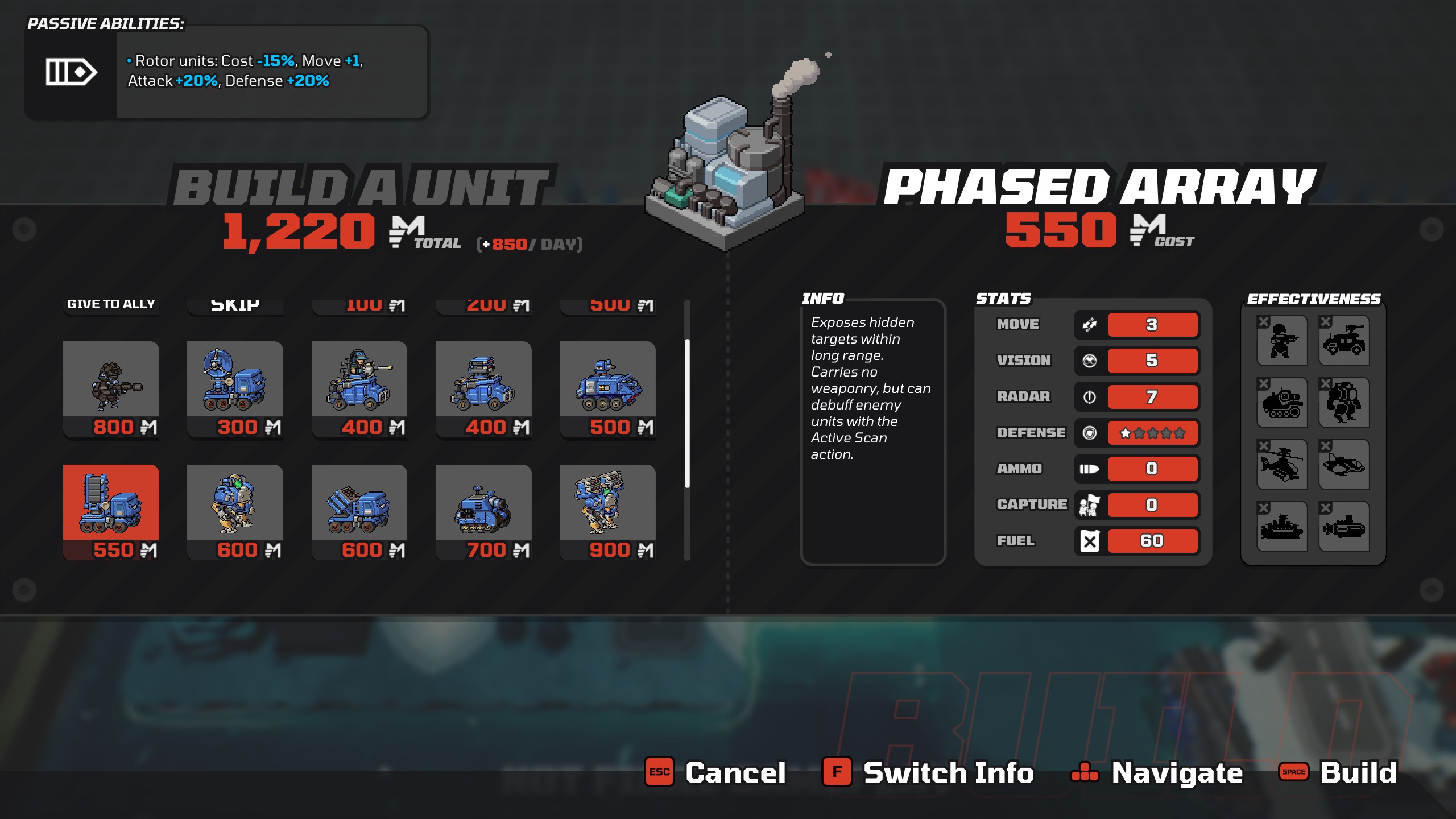
Capturing facilities is the foundation of every battle. Infantry units secure cities and production buildings, those facilities provide income and that money allows you to expand your army. None of this is especially complicated on its own, but the decisions surrounding it immediately matter.
Producing the strongest vehicle available is not necessarily the right answer. Every unit has an intended purpose, preferred targets and limitations that must be considered alongside its price. A powerful armoured vehicle can become an expensive mistake if it cannot reach the part of the battlefield where it is needed, while a cheaper unit can completely change an encounter when used against the correct target.
The playtest was good at pushing me towards understanding these relationships. It showed me which units worked well against particular enemies, what a sensible opening strategy looked like and which facilities deserved immediate attention. I was learning because my decisions had visible consequences, not because the game constantly stopped to explain another rule.
There is a proper training mode, but I never felt that the game depended on it. Most of the fundamentals became clear simply by playing. That is important for a strategy game with this many units and overlapping mechanics. Tiny Metal 2 wants players to think carefully, but it does not make learning how to play feel like studying an instruction manual.
The Lock On and Focus Fire system is where individual units begin feeling like parts of a larger army. Instead of attacking immediately, several units can lock onto the same opponent. A later attack then activates the prepared units and combines their firepower into one coordinated strike. Used correctly, this can destroy an enemy before it has an opportunity to retaliate.
That makes the order of every action important. I was not simply moving everything into range and selecting the nearest available target. I had to consider which units should prepare an attack, which one should trigger it and whether committing several units to one position would leave another part of my army exposed.
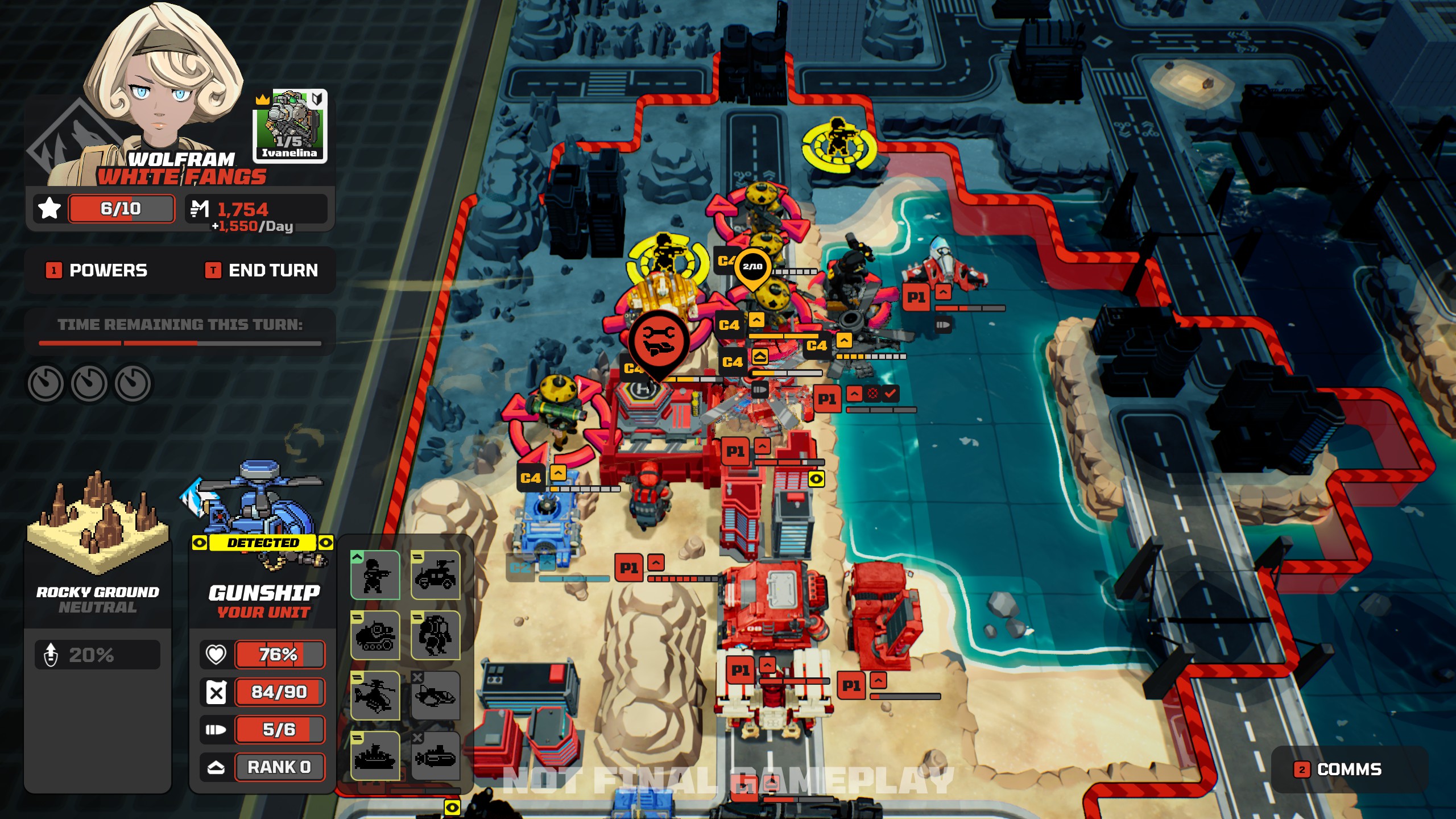
Unit direction adds another consideration. Vehicles can be left facing a particular way, while attacks from the side or rear can become more effective. Positioning therefore matters even after a unit has finished attacking. An aggressive move may inflict heavy damage, but it can also leave that unit vulnerable during the opponent’s turn.
These additional decisions never became frustrating during my time with the build. They gave every turn more purpose without making the game difficult to understand. I could usually recognise why a plan worked or failed, which encouraged me to adjust my approach instead of blaming the game.
Naval combat is the sequel’s largest addition, introducing battleships, destroyers, submarines, transport vessels and aircraft carriers alongside the existing land and air forces. What makes this interesting is that the sea does not appear to function as a completely separate battlefield. Naval units can support coastal attacks, transports create new routes for infantry and aircraft carriers bring air power into areas that would otherwise be difficult to reach.
The expanded battlefield naturally creates more difficult production decisions. Spending heavily on a fleet means having fewer resources available for tanks and infantry. Ignoring the sea, however, can allow another commander to control valuable routes and threaten coastal positions.
Even against CPU commanders, I could see the potential of having several conflicts develop at the same time. Adding more units is easy. Making them feel relevant to the same battle is much harder, and the playtest gave me confidence that AREA 35 understands the difference.
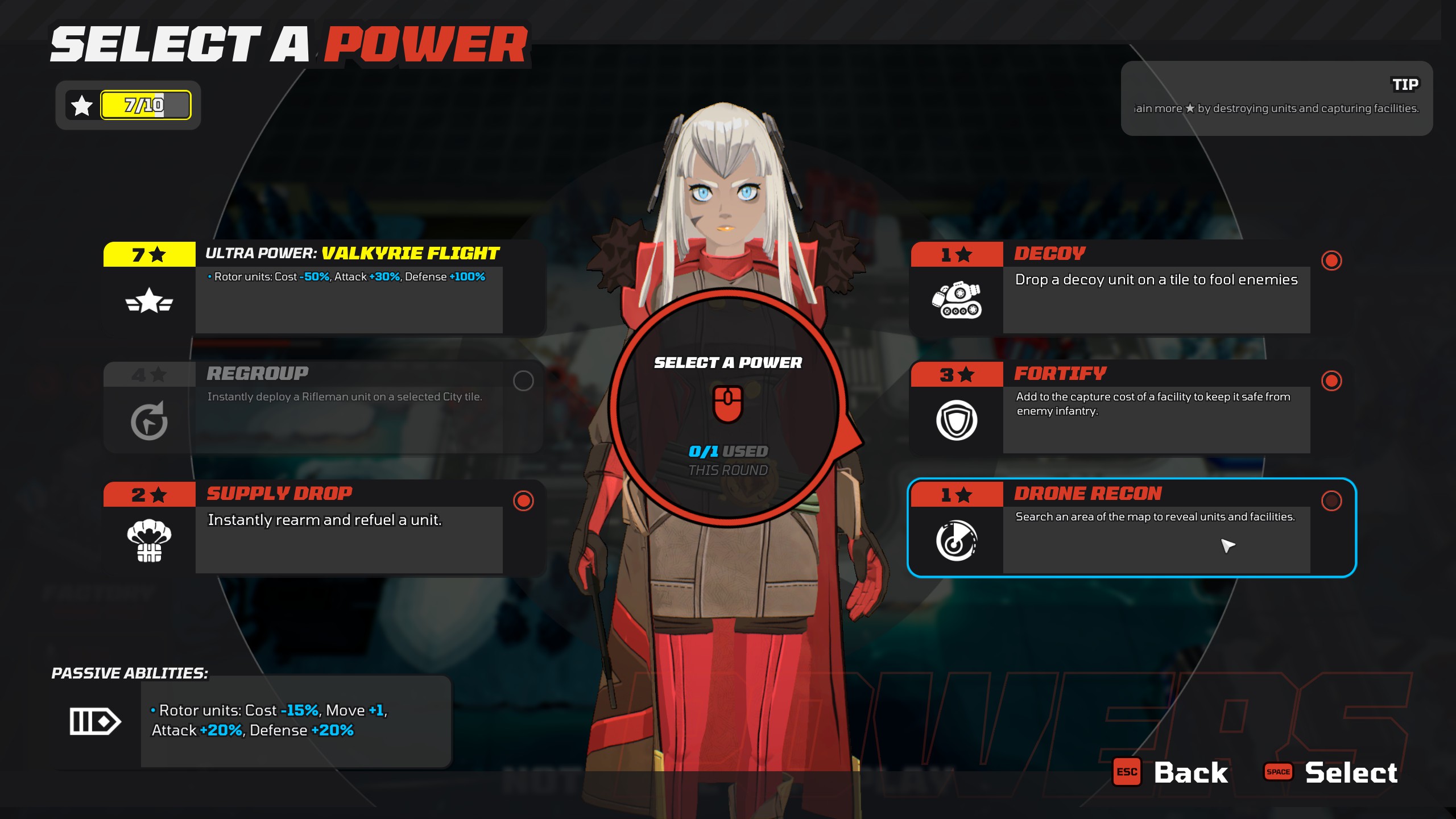
The variety does not stop with military units. Tiny Metal 2 features a large selection of commanders, each with a distinctive appearance, personality and approach to warfare. The full game is expected to include more than 15 playable commanders, including ten newcomers alongside returning characters such as Nathan Gries, Wolfram and Nora Godwin.
Some commanders are particularly suited to specific strategies. Subiya improves the effectiveness of concentrated Focus Fire attacks, while Aitor makes transport units cheaper and strengthens troops after they disembark. These abilities can change which units are worth producing and how aggressively they should be positioned.
There are still major parts of the game that I cannot properly judge. The playtest was built around online competition and cooperation, including matches for as many as eight commanders, but I primarily played against the CPU because it was very difficult to find an online match. I therefore cannot say whether waiting between turns becomes a problem, how easily players can coordinate attacks or whether the largest maps maintain a reasonable pace.
The complete campaign is another important unknown. AREA 35 is promising more than 100 Campaign and Skirmish maps and over 15 commanders. That sounds massive, but the final game must prove that its missions, opponents and tactical situations can remain varied across that amount of content.
Despite those unanswered questions, Tiny Metal 2 left a much stronger impression than I expected. It was not a particular ship, commander or spectacular attack that stayed with me. It was how naturally the game turned every decision into a lesson. I finished the playtest understanding its battlefield better than when I started, but also thinking about how much more there was left to learn.
Remothered: Red Nun’s Legacy has a gripping atmosphere and promising survival tools, but its repetitive hiding and rough visuals need…
The Alighieri Circle: Dante’s Bloodline is difficult to recommend beyond players who are especially interested in Dante or enjoy solving…
Orc Incremental offers satisfying progression, entertaining totem combinations and enough content to justify its affordable price.
![[GAMESCOM 2026] Chronoscript: The Endless End Preview – Beautiful Pages Hide Deliberate Combat](https://www.indie-games.eu/wp-content/uploads/2026/09/Chronoscript-The-Endless-End-1-1024x576.jpg)
Chronoscript: The Endless End stands out from other Metroidvanias by blending 2D manuscript worlds with exploration inside a 3D manor.
![[GAMESCOM 2026] MegaGum Preview – Combat Hits Hard in This Sticky Platforming Adventure](https://www.indie-games.eu/wp-content/uploads/2026/09/MegaGum-09-09-26-5-1024x576.jpg)
MegaGum combines hard-hitting combat, varied weapons and Gum-powered platforming in a promising Gamescom 2026 demo.
![[GAMESCOM 2026] Delphinium Preview – Cozy Routine Mixed With Enjoyable Minigames](https://www.indie-games.eu/wp-content/uploads/2026/03/Delphinium--1024x665.jpg)
Delphinium mixes cozy farming, exploration and relationships with enjoyable fishing, cooking and forging minigames in its Gamescom 2026 demo.
Lady Death: Demonicron looks the part, but underneath its excellent comic-book exterior is a clunky and painfully short brawler.
![[GAMESCOM 2026] Tomb Raider: Legacy of Atlantis Preview – Expands the Original Without Losing Its Identity](https://www.indie-games.eu/wp-content/uploads/2026/09/tomb-raider-legacy-of-atlantis-06-02-26-1-1024x576.jpg)
Tomb Raider: Legacy of Atlantis brings Lara back to her roots, but its Gamescom 2026 showing proved this is far…
![[GAMESCOM 2026] Clive Barker’s Hellraiser: Revival Preview – Ready to Open the Box](https://www.indie-games.eu/wp-content/uploads/2026/09/Clive-Barkers-Hellraiser-Revival-08-30-26-1-1024x576.jpg)
Hellraiser: Revival preserves the franchise’s sex, gore and psychological horror while delivering approachable survival-horror gameplay.

Swan Song creates a peaceful and forgiving puzzle space without removing the challenge that makes solving a difficult puzzle rewarding.
Mortal Shell II starts brilliantly but grows repetitive and exhausting, while remaining a rewarding and ambitious Soulslike sequel.
![[GAMESCOM 2026] Terranigma Preview – A Lost SNES Classic Returns in 2027](https://www.indie-games.eu/wp-content/uploads/2026/08/Terranigma-1-1024x576.jpg)
After more than three decades of limited availability, Terranigma is returning in 2027. We played its enhanced re-release at Gamescom…
Reading another person’s mind is often presented as a desirable superpower, but Sister Other Paranoia immediately understands why it could…
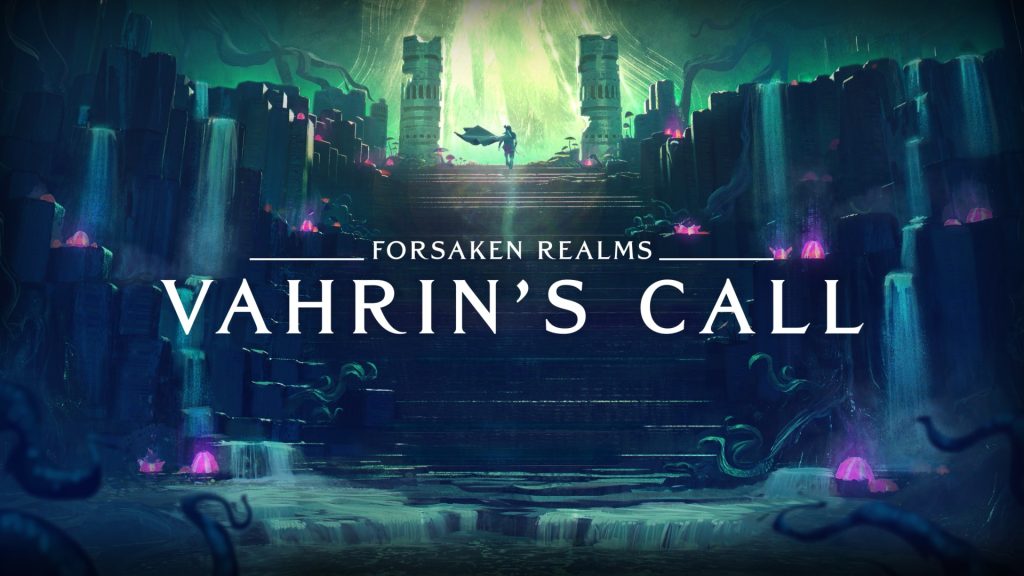
Forsaken Realms: Vahrin’s Call is exactly the kind of ambitious, slightly clumsy fantasy RPG that used to be far more…
![[Early Access] 2nd EVE – Sci-Fi Action RPG That Lacks a Sense of Stakes](https://www.indie-games.eu/wp-content/uploads/2026/08/2ND-EVE-1024x576.jpg)
2nd Eve is a space-set action RPG in which we strive to save humanity.
![[PREVIEW] Dreamcards – Strategic Exploration of Consciousness](https://www.indie-games.eu/wp-content/uploads/2026/08/Dreamcards_20260810_233631_0000-1024x576.jpg)
Dreamcards is a roguelike deckbuilder centered around dreams and nightmares.
![[Early Access] OFFBEAT – Incredibly Fun Way to Start a Music Career](https://www.indie-games.eu/wp-content/uploads/2026/08/Offbeat_20260808_201446_0000-1024x576.jpg)
In OFFBEAT, we play the role of a jobbing composer who is launching their music career.
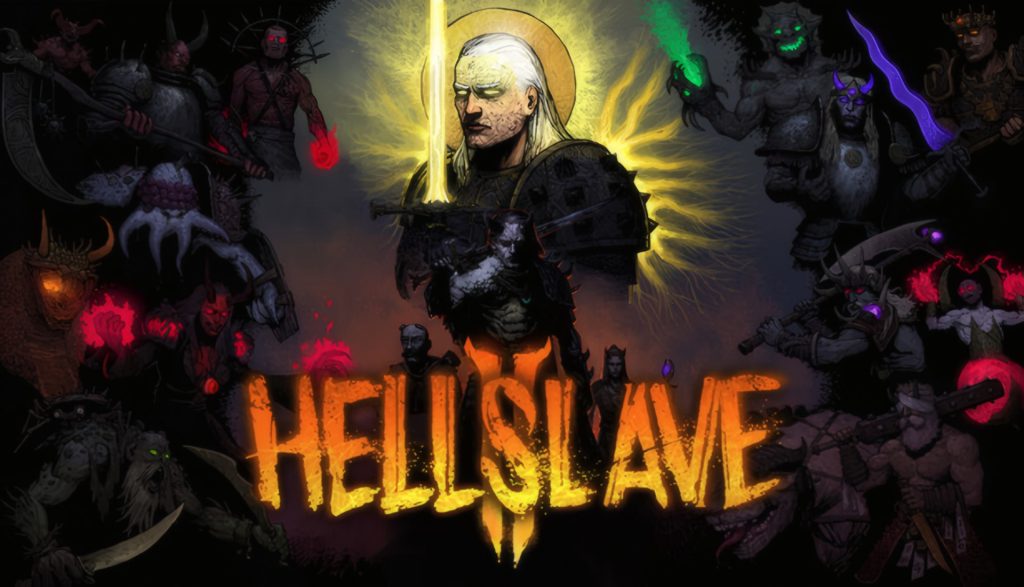
HellSlave II retains the original’s oppressive atmosphere, morally grey world and striking art while adding a larger world, randomized loot…
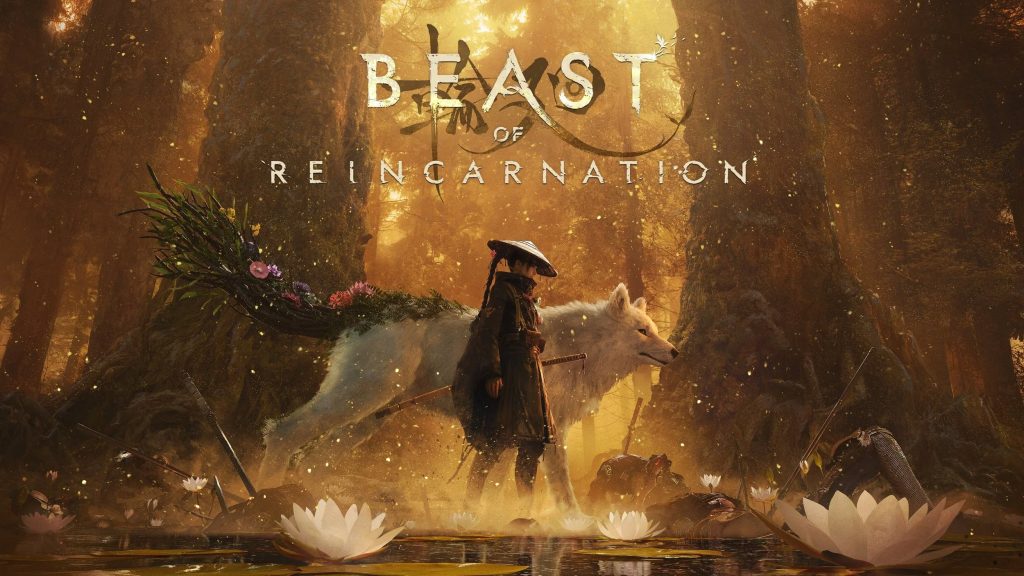
Beast of Reincarnation is an ambitious but uneven action RPG elevated by satisfying parry combat, beautiful art direction and the…

K-pop Idol Stories: Road to Debut captures the pressure of building idol group, but its management systems never explore that…
