HellSlave II: Judgment of the Archon – Building the Perfect Damnation
HellSlave II retains the original’s oppressive atmosphere, morally grey world and striking art while adding a larger world, randomized loot…

If you enjoy independent indie game coverage, consider supporting Indie-Games.eu on Patreon. It helps keep the site independent.
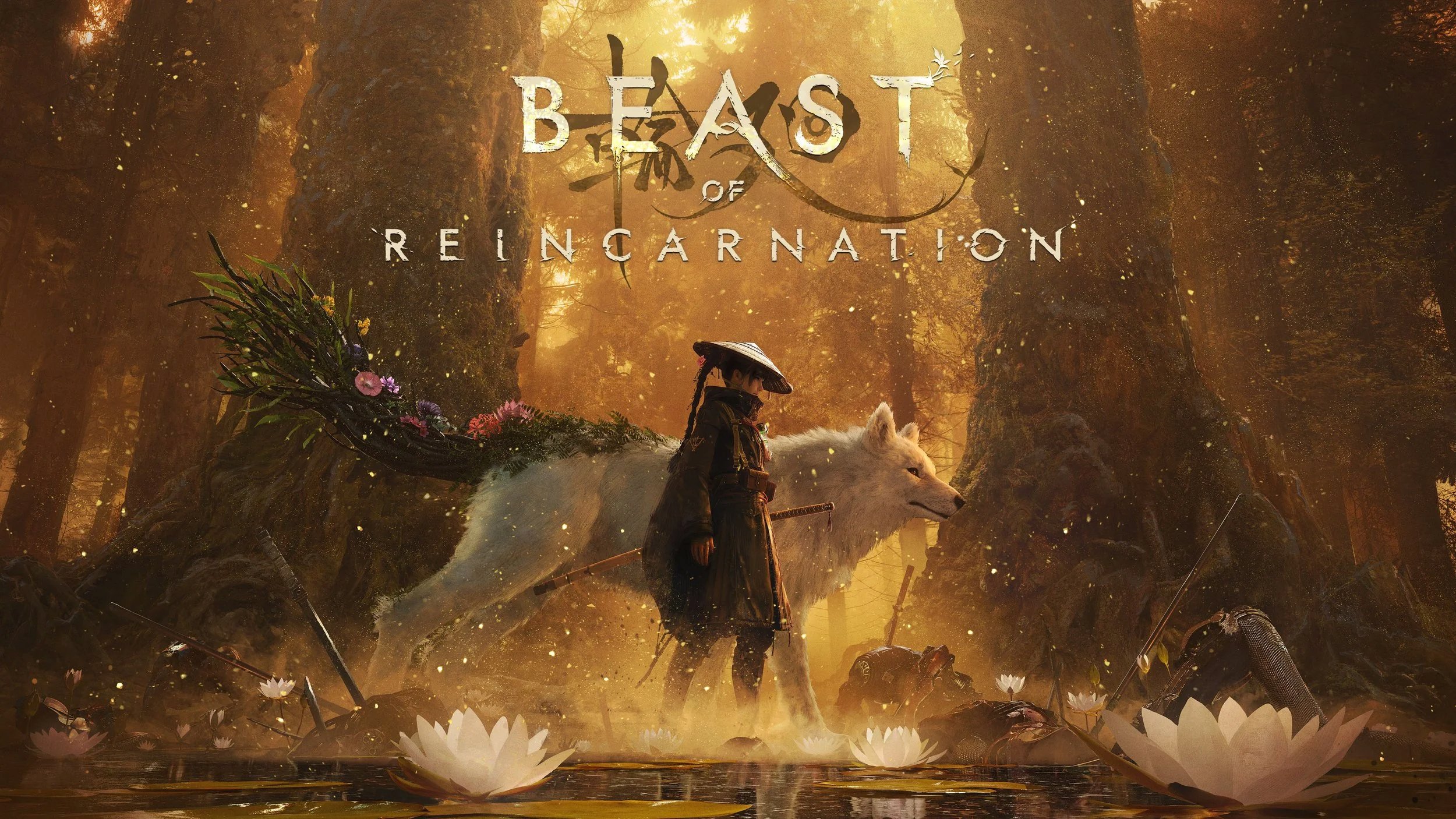
Game Freak moving away from Pokémon to develop a serious post-apocalyptic action RPG should have resulted in something completely unexpected. Instead, Beast of Reincarnation is surprisingly familiar. It borrows its parry-heavy combat from Sekiro, its ruined world and melancholy from NieR, and its mixture of nature and machinery from countless other Japanese stories. There are some great ideas here, particularly in the partnership between Emma and her canine companion Koo, but they are trapped inside an uneven journey that rarely reaches its full potential.
That does not make it a bad game. Its combat can be satisfying, the art direction produces some beautiful scenes, and Koo is more than another disposable AI companion. Unfortunately, repetitive enemies, ordinary exploration and an unnecessarily prolonged narrative leave Beast of Reincarnation sitting somewhere in the middle of the genre rather than becoming Game Freak’s bold new masterpiece.
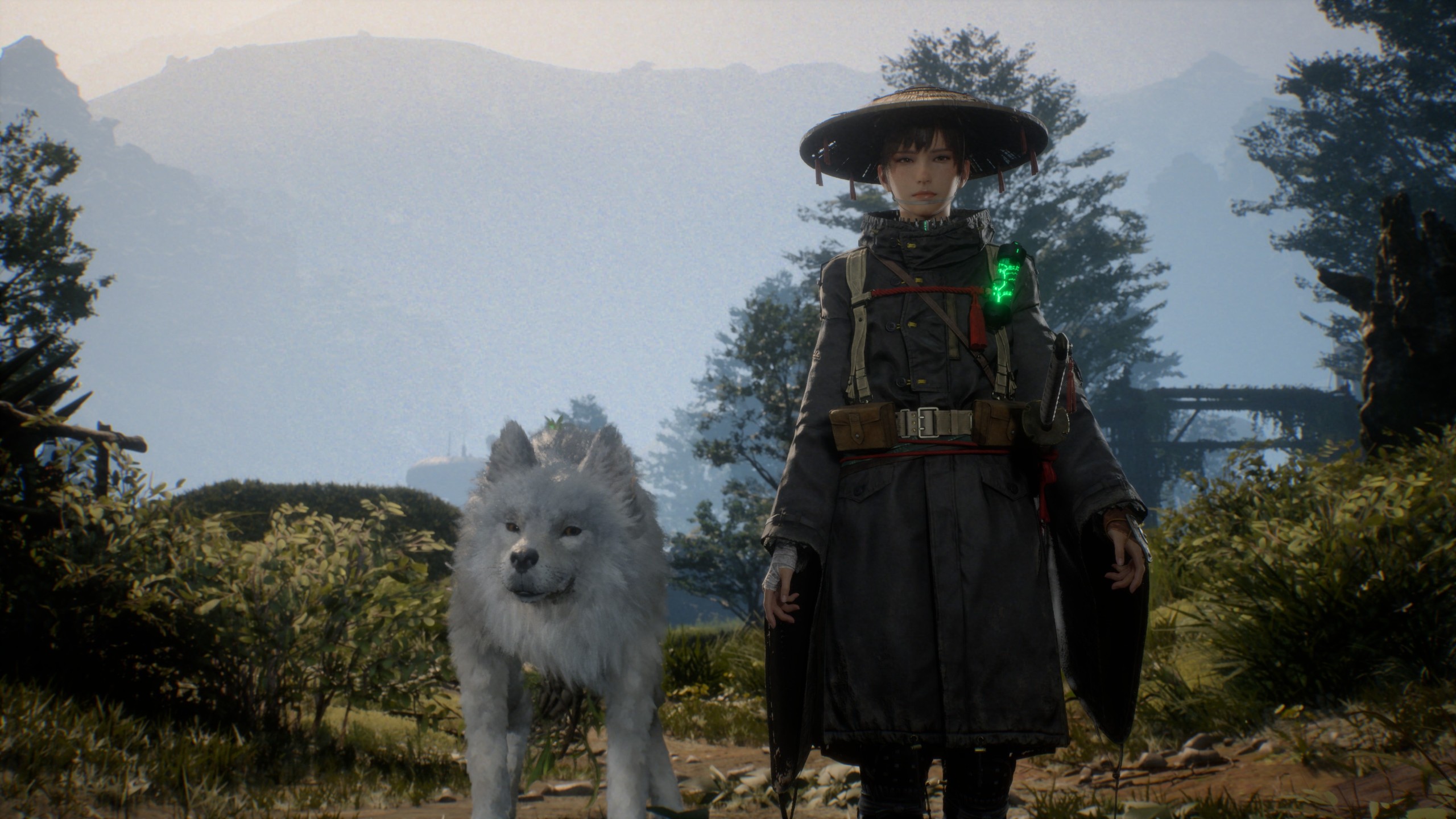
Set in Japan in the year 4026, Beast of Reincarnation presents a world devastated by the Blight, a corrupting force capable of affecting animals, machines and humans. Emma was born stained by it, leaving her without her memories and emotions while transforming her hair into plant-like vines. Humanity fears her condition, yet her ability to absorb the Blight also makes her one of its few remaining hopes.
Her unlikely companion is Koo, a canine Malefact who should technically be her enemy. Together, they travel towards the Beast of Reincarnation, a mysterious creature responsible for a destructive cycle that returns every hundred years. The setup explores identity, love, prejudice and what it means to be human, with Emma slowly developing relationships despite barely understanding her own feelings.
It is recognisably Japanese storytelling: an emotionless heroine, lost memories, cyclical destruction, humanity rejecting its potential saviour and nature reclaiming a dead technological civilization. The restrained narration, sincere conversations and long periods of silence can create an effective melancholy.
However, the game often confuses withholding information with creating mystery. Chapters regularly end with cliffhangers, important answers are delayed, and some revelations are explained through dialogue instead of being shown naturally. The relationship between Emma and Koo carries the story, but the narrative takes too long to reach points that are not always surprising.
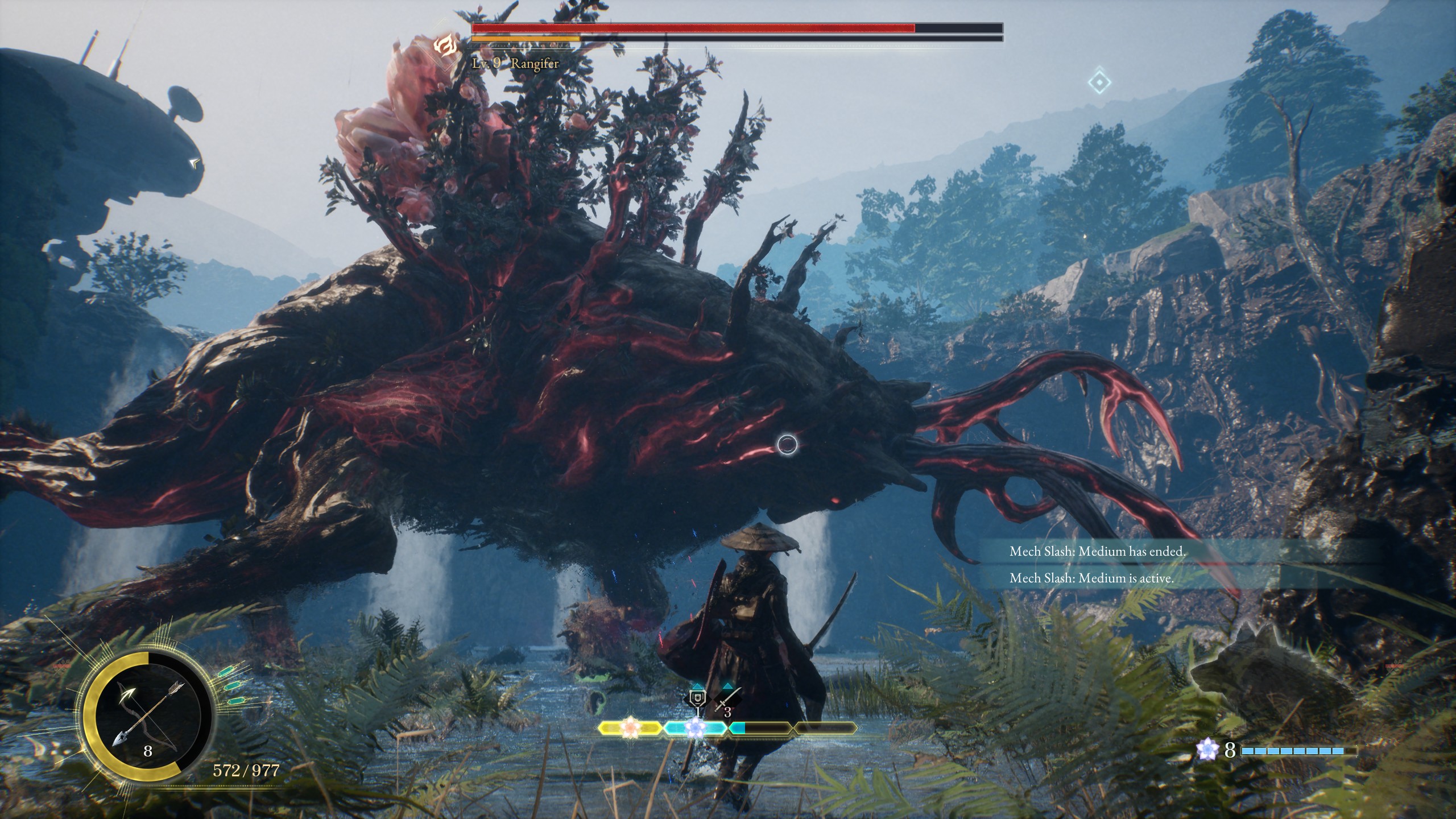
Emma fights in real time using swords, ranged weapons, dodges, plant abilities and, most importantly, parries. Successful deflections negate damage, increase enemy stagger and generate Florescence Points used to activate Koo’s Bloom Arts. Opening his command menu slows time, allowing you to select an ability and target without completely interrupting the battle.
This combination is the game’s strongest idea. Emma provides fast action while Koo contributes healing, crowd control and status effects such as poison, acid, burning and corrosion. He can trap enemies with roots, help launch them into the air or increase their stagger. When everything comes together, a battle moves smoothly between sword clashes, plant attacks, projectiles and tactical commands.
The problem is not necessarily the combat system but how inconsistently the game uses it. Regular enemies appear in small, predictable groups and do not demand everything Emma and Koo can do. Stealth assassinations and ranged attacks can remove several threats before a proper fight begins, while limited enemy variety makes encounters increasingly routine. Combat only truly comes alive against stronger mini-bosses and major Nushi.
Emma and Koo have separate, extensive skill trees covering new attacks, passive bonuses, projectile improvements, plant powers and Bloom Art modifications. Different builds are possible, and players struggling with parrying can invest heavily in the crossbow or longbow. Special ammunition includes explosive, poisonous and corrosive projectiles, while aiming in the air slows time at the cost of Emma’s Entanglement Gauge.
There are also multiple swords with different statistics, effects and elemental properties. However, they remain variations of the same basic weapon rather than genuinely different combat styles. Armour provides additional bonuses but does not visibly alter Emma’s appearance, making new equipment less exciting than it should be.
Progression is deep enough to appear overwhelming during the opening hours. There are two characters to develop, several combat resources, equipment effects, ammunition and multiple status weaknesses to consider. Eventually these pieces make sense, but the game sometimes feels as if it has built more systems than its enemies and levels can properly support.
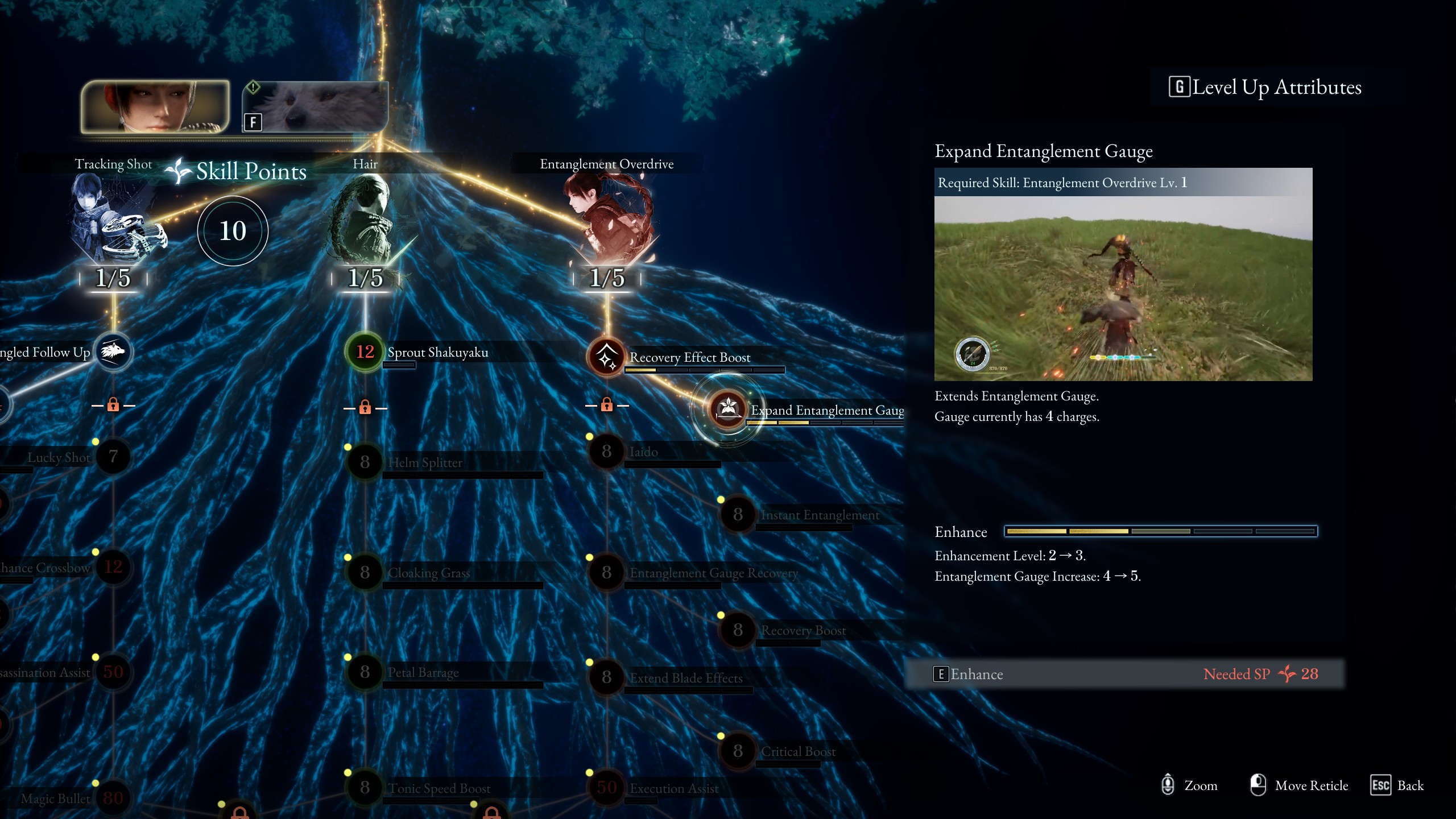
The journey is divided into large districts rather than one open world. These stages contain campsites, optional paths, resources, equipment, mini-bosses and ingredients used for cooking. Emma’s vine-like hair lets her reach elevated platforms, cross damaged structures and assassinate enemies from above, providing exploration with welcome verticality.
Yet the world frequently looks more open and mysterious than it actually is. Many detours lead to routine materials, enemies can feel randomly placed, and dense vegetation makes it difficult to distinguish usable paths from decorative scenery. The Blight can transform environments into forests in real time, but that striking concept does not prevent many regions from merging into one overwhelmingly green wasteland.
The art direction remains impressive. Traditional Japanese imagery, futuristic ruins, flowers and grotesquely corrupted animals create several memorable scenes. Bosses are particularly imposing, and the sharp sound of swords colliding makes successful parries much more satisfying. The melancholic orchestral soundtrack supports the atmosphere well, although repeated tracks and constant combat reminders become tiring.
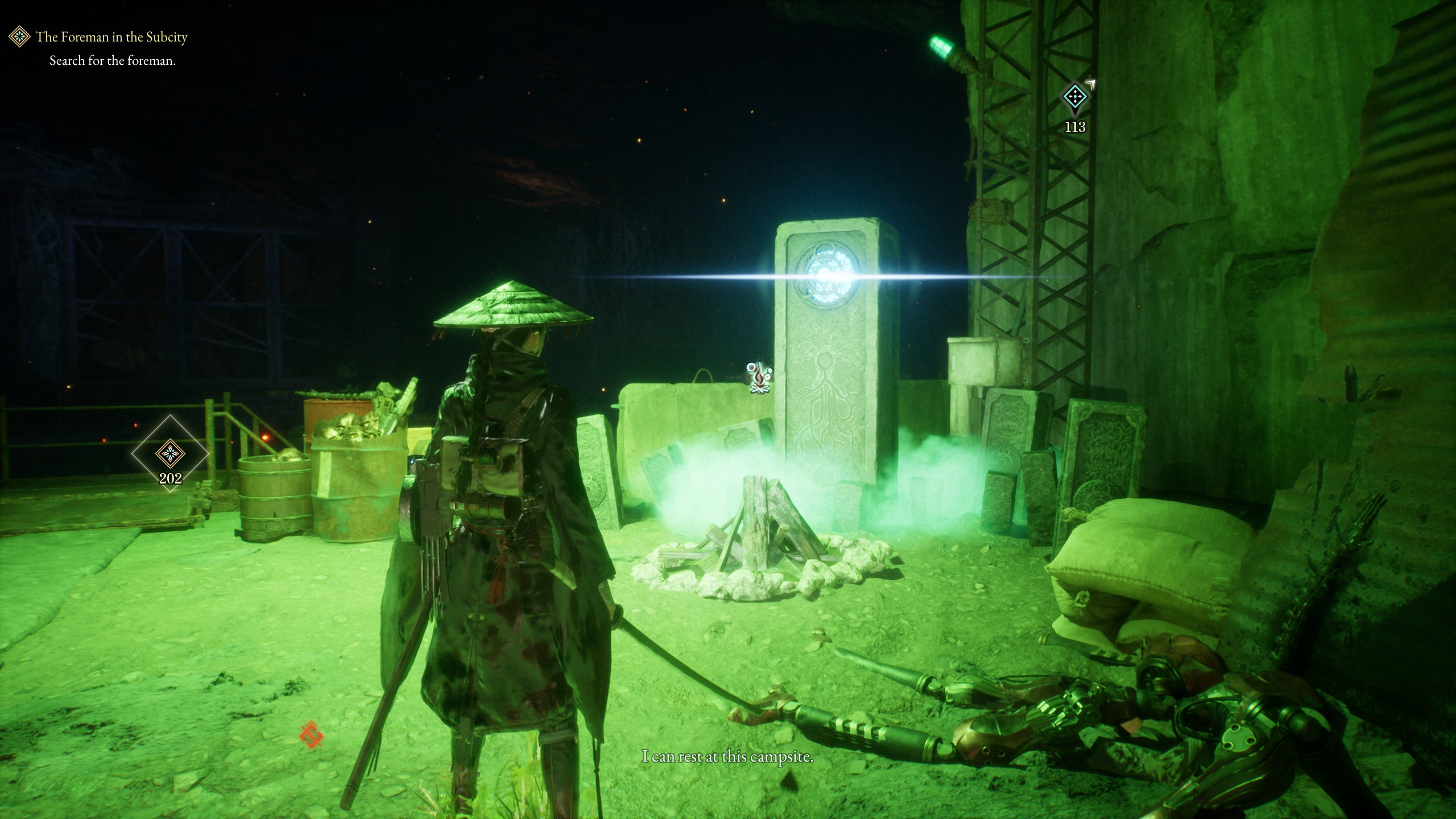
Beast of Reincarnation is at its best during major battles. Fighting a Nushi requires careful parries, well-timed dodges, elemental weaknesses and coordinated abilities from both characters. These encounters finally allow all of its mechanics to operate together, even if enormous enemies can occasionally turn the camera into another opponent.
Unfortunately, the quieter hours between those fights expose the game’s limitations. Repeated enemies, visually similar environments and padded storytelling make an already lengthy campaign feel longer. New skills continue arriving, but the situations in which you use them do not evolve at the same rate.
There is enough here for action-RPG fans to enjoy, especially those who want a more forgiving alternative to Sekiro. Koo gives the adventure genuine charm, and Game Freak deserves credit for attempting something far outside its usual work. Even so, Beast of Reincarnation is an average action RPG elevated by a lovable companion and occasional flashes of excellent combat. It is ambitious and often beautiful, but rarely as distinctive or exciting as it initially promises.
Beast of Reincarnation is an ambitious but uneven action RPG elevated by satisfying parry combat, beautiful art direction and the genuinely charming relationship between Emma and Koo. Its strongest boss battles show how effective the combination of swordplay, tactical companion commands and elemental effects can be. Unfortunately, the adventure surrounding those highlights is far less remarkable. Repetitive enemies, visually similar districts, ordinary exploration and a prolonged narrative prevent the game from becoming the distinctive new identity Game Freak appeared ready to establish.
Ending Thoughts
This review is based on the Game Pass version of the game
HellSlave II retains the original’s oppressive atmosphere, morally grey world and striking art while adding a larger world, randomized loot…

K-pop Idol Stories: Road to Debut captures the pressure of building idol group, but its management systems never explore that…
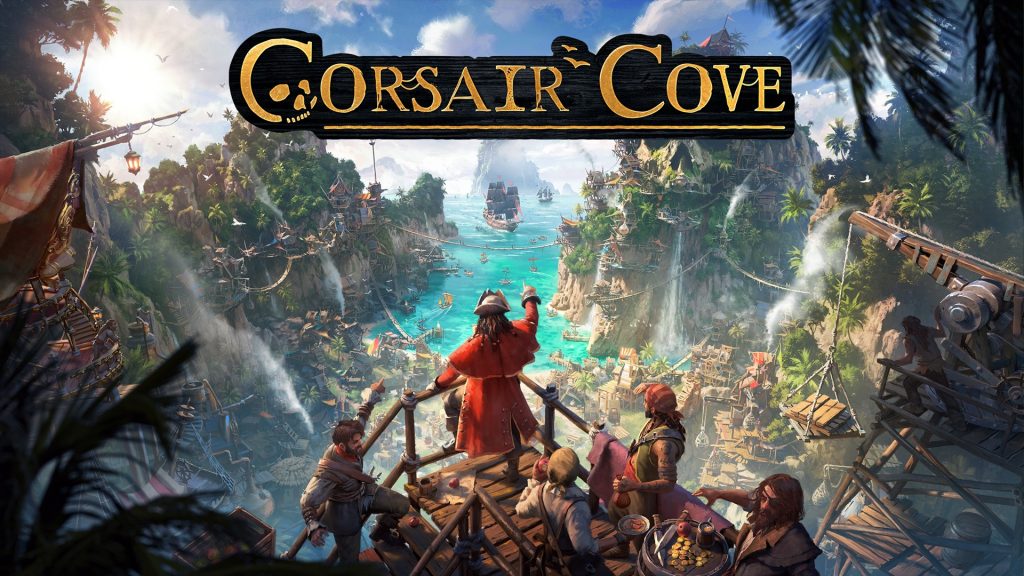
Hooded Horse keeps finding strategy games that know their audience, and Corsair Cove extends its impressive run of excellent city-builders.
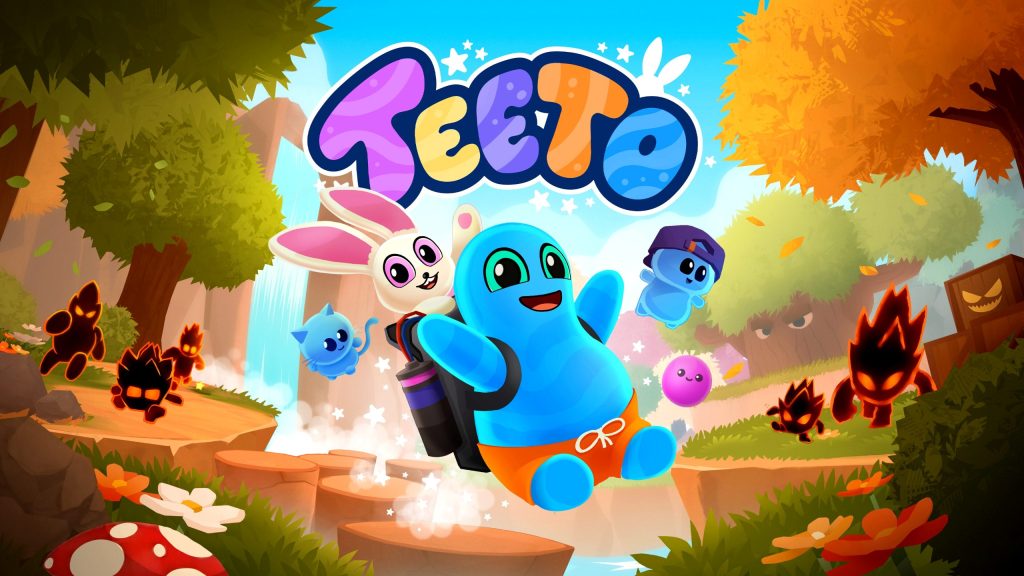
Teeto is a warm, cozy, creative and highly enjoyable 3D platformer that understands why classic collectathons remain so appealing.
Turnip Mountain stands out for its combination of a unique control system and a minimalist approach.
Dystopicon is an imaginative and memorable narrative experiment with sharp social commentary, engaging world-building and several wonderfully absurd scenarios.

Maneki Mania is an incremental game centered around petting a lucky cat.
XeGrader Plus delivers colorful retro shooting, but basic mechanics, a short campaign and paid retro modes make its €20 price…
It has been roughly two and a half years since Palworld first entered Early Access, and quite a lot has…
![[EARLY ACCESS] The Last Caretaker – Survival Game I Cannot Stop Playing](https://www.indie-games.eu/wp-content/uploads/2026/07/The-last-Caretaker-Key-Art-1024x587.jpg)
The Last Caretaker is a compelling survival crafter with a flooded world and mobile base, but weak combat and performance…

Advent: Dawn is an intriguing science-fiction visual novel elevated by a likable cast and one of the most convenient flowchart…
![[EARLY ACCESS] Hell Maiden – Beautiful but Uneven Journey Through Hell](https://www.indie-games.eu/wp-content/uploads/2025/06/HMD_screenshot_019-1024x576.jpg)
Bullet heaven and rougelite game Hell Maiden lands between a polished Early Access release and a promising game that still…
![[PREVIEW] Dark Queen of Samobor – Promising Croatian Adventure Still in Need of Polish](https://www.indie-games.eu/wp-content/uploads/2026/07/Dark-Queen-of-Samobor-1024x587.jpg)
Dark Queen of Samobor is a promising 2.5D side-scrolling action-adventure that combines Croatian folklore with combat, puzzles and cinematic platforming.
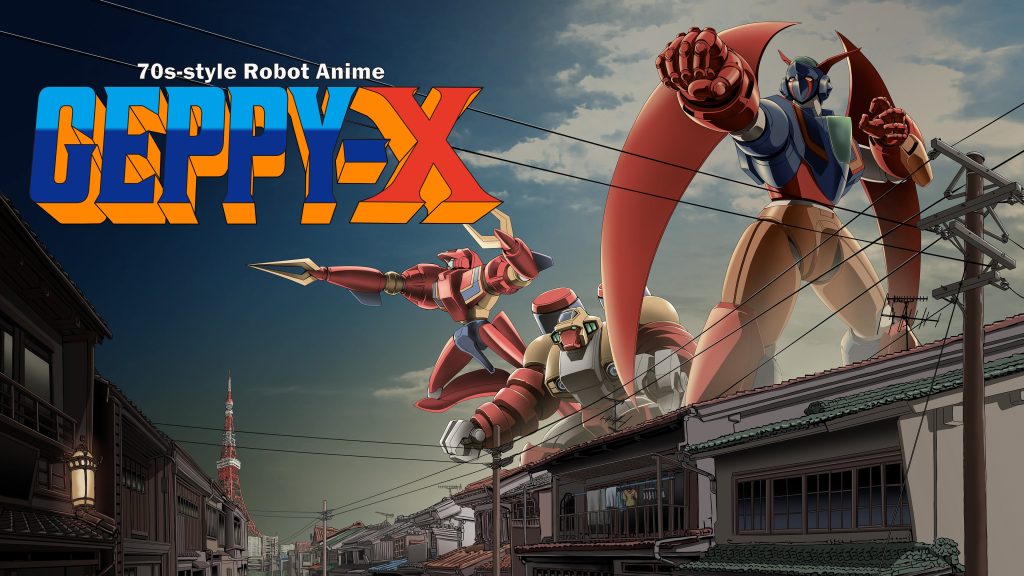
70s-style Robot Anime Geppy-X offers incredible animation, music and mecha nostalgia, but its average shooting make the €39 price difficult…

Denshattack! blends Tony Hawk, Jet Set Radio, and Japanese train culture into one of the year's most creative and unforgettable…
If you're looking for a game that takes an incredibly simple idea and somehow turns it into something addictive, KAZ…
Cat Mail Co. charms with cozy visuals and satisfying mail sorting, but its full release doesn't quite live up to…
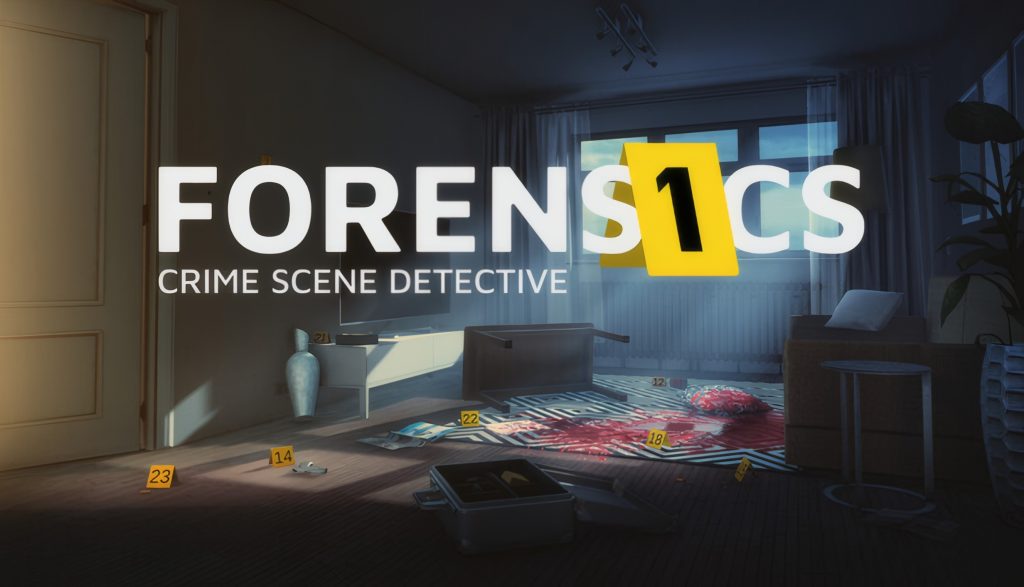
Forensics: Crime Scene Detective follows Aerosoft's familiar formula: an interesting simulation with decent visuals, weak optimization, and repetitive gameplay.

Foxy The First Steps is an excellent precision platformer that understands exactly what makes the genre enjoyable.

Tokyo Valkyries blends visual novel, roguelite deck-building, and fan service into a surprisingly enjoyable mix, despite few standout elements.
