The Alighieri Circle: Dante’s Bloodline – Promising Descent That Never Goes Deep Enough
The Alighieri Circle: Dante’s Bloodline is difficult to recommend beyond players who are especially interested in Dante or enjoy solving…

![[PREVIEW] Remothered: Red Nun’s Legacy – Ambitious Survival Horror That Needs More Polish](https://www.indie-games.eu/wp-content/uploads/2026/09/Remothered-Red-Nuns-Legacy-4.jpg)
If you enjoy independent indie game coverage, consider supporting Indie-Games.eu on Patreon. It helps keep the site independent.
Remothered: Red Nun’s Legacy understands that the possibility of danger can be more frightening than the attack itself. Its gloomy corridors made me feel as though something could appear behind me at any moment. Unfortunately, the playtest also showed that forcing the player to repeat the same suspenseful action too often can quickly drain it of its power.
I spent approximately 45 minutes with the PC playtest, which only represents a small part of the complete game. There is ambition in its mixture of exploration, stealth and improvised survival, but everything from its mechanics to its visual presentation needs more polish before the October release. You can wishlist the game on Steam.
The final chapter of the Remothered trilogy follows Susan, a mother searching for her missing daughter after receiving a mysterious recording. Her investigation takes her to a decaying residence on the slopes of Mount Etna, where the history of the Ashmann family, the Cristo Morente convent and the Red Nun begins to emerge. For more about the story and cast, see our earlier Red Nun’s Legacy coverage.
The story was alright during the section I played, although 45 minutes was not enough for me to form a meaningful connection with Susan or the other characters. A short playtest can introduce the central mystery, but it cannot easily demonstrate whether its characters will be strong enough to carry an entire psychological horror story.
The atmosphere made a much stronger first impression. Even when nothing was directly attacking me, I rarely felt safe. Enemies roam throughout the environment, so taking time to inspect a room always carries the risk of something approaching from behind. The sense that I was being watched or followed gave otherwise ordinary exploration a constant layer of dread.

The main threat in the playtest was a strange, deformed nun who searched the environment and chased me after being spotted. The enemy AI was not particularly dumb. If she saw me run towards a hiding place, she could follow and pull me back out. She was also faster than Susan, which made every chase feel dangerous instead of allowing me to sprint safely around the same corridors.
There are numerous hiding places scattered across the map, so escaping is usually possible if you break sight at the right moment. However, hiding introduces a minigame in which you must keep the mouse cursor near the centre of a circle whenever the enemy comes close. It initially seemed like a good way of recreating the effort of remaining silent while someone searched nearby.
The problem is that the minigame appears every time the enemy approaches. What began as a tense interaction became annoying through repetition. Hiding already creates suspense because I do not know whether the enemy has seen me or will check my location. Adding the same short cursor challenge to every encounter feels unnecessary. It turns a naturally frightening moment into a mechanic I am simply waiting to finish.
This also highlights my broader concern with how heavily Red Nun’s Legacy relies on stealth and escape. Enemies can pursue Susan across the environment, but there is no reliable way to remove them permanently or make them abandon the chase for long. That may suit the helpless tone Stormind wants, yet it risks making exploration feel restrictive if the same pressure continues throughout the full game.
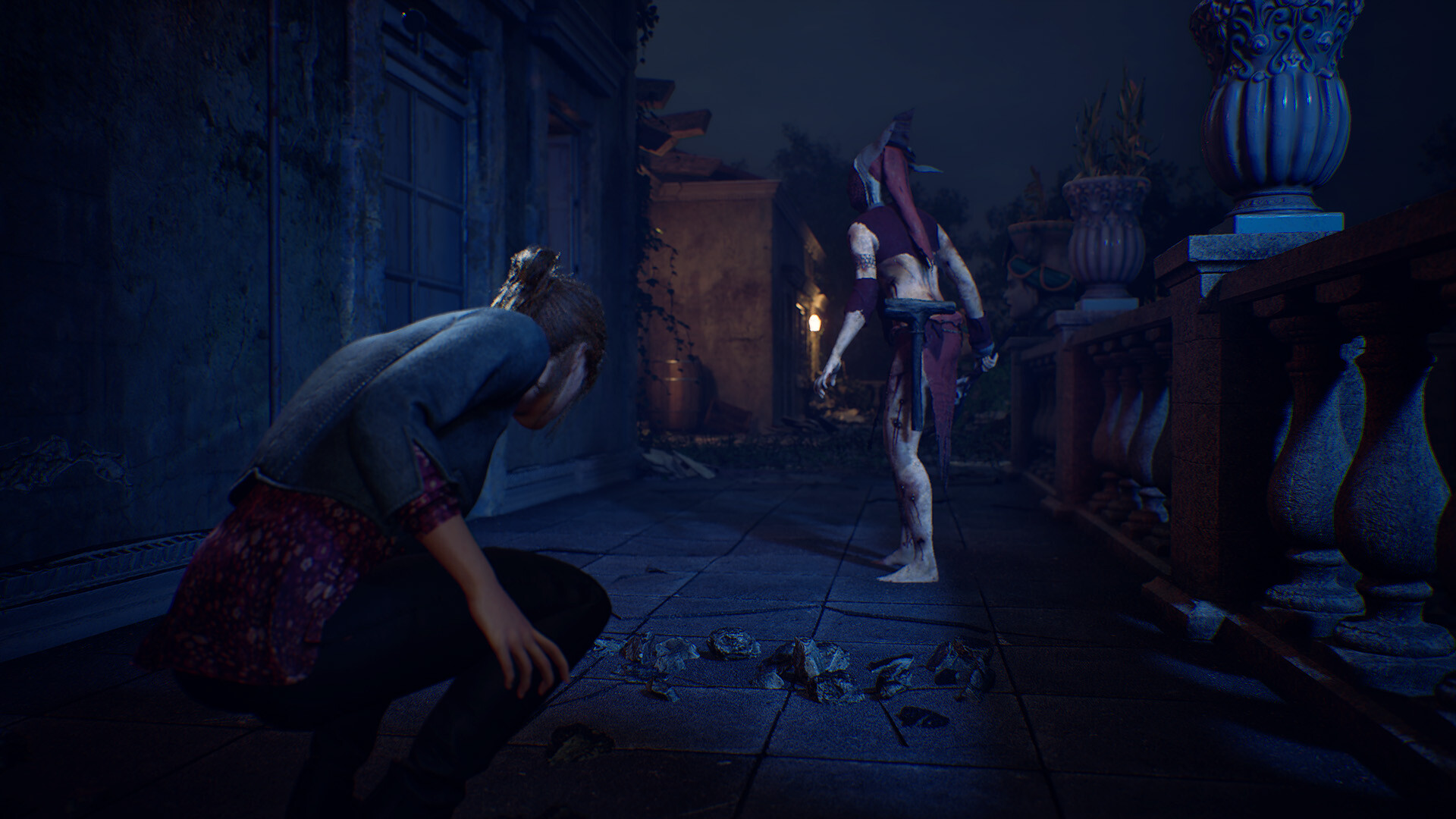
Susan is not completely defenceless, and this is where the gameplay becomes more interesting. Makeshift weapons can block an attack or stun an enemy long enough to escape. Plates can be thrown to create a noisy distraction, while scissors and screwdrivers act as defensive items when an enemy grabs you. Healing items also matter because Susan has a visible health system.
I like the idea of scavenging different objects and deciding whether they are more useful as distractions, emergency weapons or protection against a grab. These items do not turn Susan into an action hero. They provide a brief opportunity to recover from a mistake while preserving the enemy as a threat. It pushes the game towards the resource management associated with Resident Evil and Silent Hill, even though its focus remains firmly on running and hiding.
Objectives were clearly displayed, and most solutions came naturally from searching rooms and examining every corner. Keys and other important objects gradually opened new routes. The structure works for a short preview, but the complete game will need more than key hunting and repeated stalker encounters to sustain itself.
Stormind is also promising retrocognition, mirror abilities and moth manipulation in the complete game. Those ideas could give Red Nun’s Legacy a stronger identity, but this limited session could not establish how important or varied they will become.
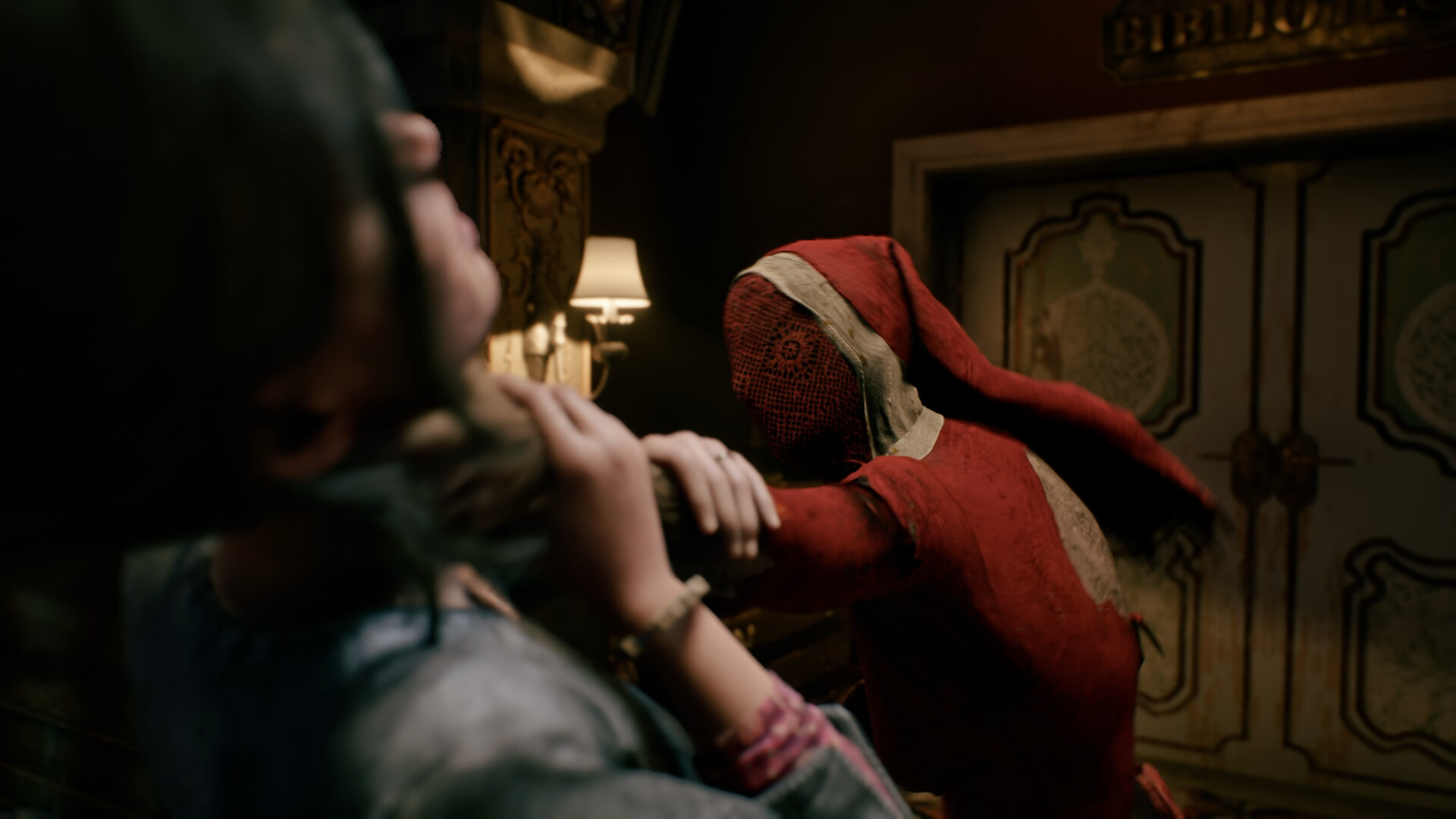
Visually, the game looked rough. The setting and lighting successfully supported the atmosphere, but not every part of the presentation felt polished. That creates an unusual contrast: the art direction made me uncomfortable in the way a horror game should, while the graphical roughness sometimes made me notice the unfinished build instead of the nightmare around me.
My concern is not that an indie production lacks blockbuster-level detail. The greater question is whether Stormind has enough time to refine the presentation and make its different mechanics feel consistently satisfying. The playtest contains plenty of ideas, but ambition only helps if the complete game can develop them instead of repeating the same encounters.
After 45 minutes, I remain cautious. Remothered: Red Nun’s Legacy created genuine tension and made exploring its halls feel dangerous. Its improvised weapons and roaming enemies could form the basis of a compelling survival horror game. At the same time, the repetitive hiding minigame, dependence on running away and generally rough presentation kept me from becoming completely convinced.
The Alighieri Circle: Dante’s Bloodline is difficult to recommend beyond players who are especially interested in Dante or enjoy solving…

Orc Incremental offers satisfying progression, entertaining totem combinations and enough content to justify its affordable price.
![[GAMESCOM 2026] Chronoscript: The Endless End Preview – Beautiful Pages Hide Deliberate Combat](https://www.indie-games.eu/wp-content/uploads/2026/09/Chronoscript-The-Endless-End-1-1024x576.jpg)
Chronoscript: The Endless End stands out from other Metroidvanias by blending 2D manuscript worlds with exploration inside a 3D manor.
![[GAMESCOM 2026] MegaGum Preview – Combat Hits Hard in This Sticky Platforming Adventure](https://www.indie-games.eu/wp-content/uploads/2026/09/MegaGum-09-09-26-5-1024x576.jpg)
MegaGum combines hard-hitting combat, varied weapons and Gum-powered platforming in a promising Gamescom 2026 demo.
![[GAMESCOM 2026] Delphinium Preview – Cozy Routine Mixed With Enjoyable Minigames](https://www.indie-games.eu/wp-content/uploads/2026/03/Delphinium--1024x665.jpg)
Delphinium mixes cozy farming, exploration and relationships with enjoyable fishing, cooking and forging minigames in its Gamescom 2026 demo.

Lady Death: Demonicron looks the part, but underneath its excellent comic-book exterior is a clunky and painfully short brawler.
![[GAMESCOM 2026] Tomb Raider: Legacy of Atlantis Preview – Expands the Original Without Losing Its Identity](https://www.indie-games.eu/wp-content/uploads/2026/09/tomb-raider-legacy-of-atlantis-06-02-26-1-1024x576.jpg)
Tomb Raider: Legacy of Atlantis brings Lara back to her roots, but its Gamescom 2026 showing proved this is far…
![[GAMESCOM 2026] Clive Barker’s Hellraiser: Revival Preview – Ready to Open the Box](https://www.indie-games.eu/wp-content/uploads/2026/09/Clive-Barkers-Hellraiser-Revival-08-30-26-1-1024x576.jpg)
Hellraiser: Revival preserves the franchise’s sex, gore and psychological horror while delivering approachable survival-horror gameplay.

Swan Song creates a peaceful and forgiving puzzle space without removing the challenge that makes solving a difficult puzzle rewarding.

Mortal Shell II starts brilliantly but grows repetitive and exhausting, while remaining a rewarding and ambitious Soulslike sequel.
![[GAMESCOM 2026] Terranigma Preview – A Lost SNES Classic Returns in 2027](https://www.indie-games.eu/wp-content/uploads/2026/08/Terranigma-1-1024x576.jpg)
After more than three decades of limited availability, Terranigma is returning in 2027. We played its enhanced re-release at Gamescom…

Reading another person’s mind is often presented as a desirable superpower, but Sister Other Paranoia immediately understands why it could…

Forsaken Realms: Vahrin’s Call is exactly the kind of ambitious, slightly clumsy fantasy RPG that used to be far more…
![[Early Access] 2nd EVE – Sci-Fi Action RPG That Lacks a Sense of Stakes](https://www.indie-games.eu/wp-content/uploads/2026/08/2ND-EVE-1024x576.jpg)
2nd Eve is a space-set action RPG in which we strive to save humanity.
![[PREVIEW] Dreamcards – Strategic Exploration of Consciousness](https://www.indie-games.eu/wp-content/uploads/2026/08/Dreamcards_20260810_233631_0000-1024x576.jpg)
Dreamcards is a roguelike deckbuilder centered around dreams and nightmares.
![[Early Access] OFFBEAT – Incredibly Fun Way to Start a Music Career](https://www.indie-games.eu/wp-content/uploads/2026/08/Offbeat_20260808_201446_0000-1024x576.jpg)
In OFFBEAT, we play the role of a jobbing composer who is launching their music career.

HellSlave II retains the original’s oppressive atmosphere, morally grey world and striking art while adding a larger world, randomized loot…
Beast of Reincarnation is an ambitious but uneven action RPG elevated by satisfying parry combat, beautiful art direction and the…

K-pop Idol Stories: Road to Debut captures the pressure of building idol group, but its management systems never explore that…
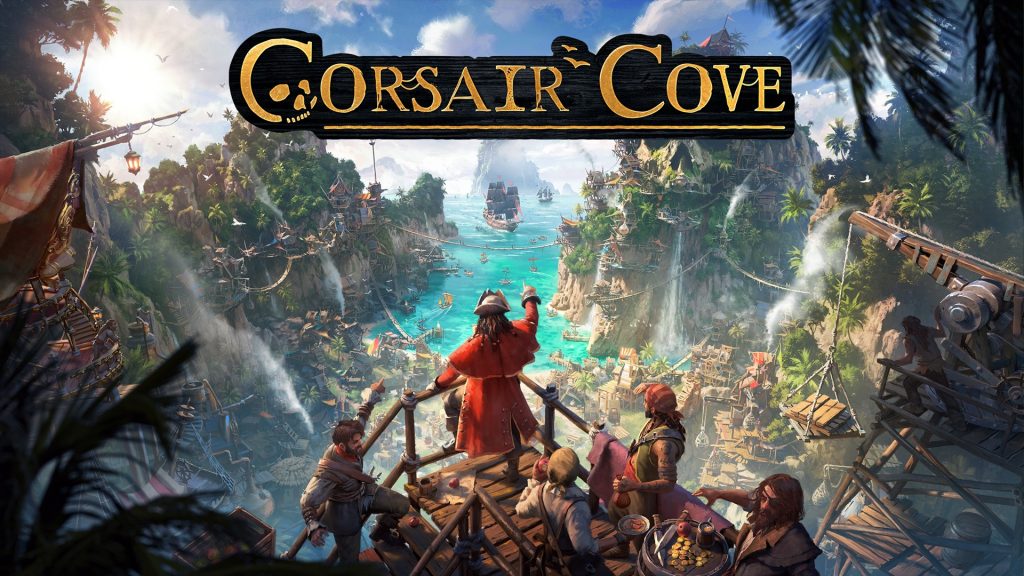
Hooded Horse keeps finding strategy games that know their audience, and Corsair Cove extends its impressive run of excellent city-builders.
