![[GAMESCOM 2026] Terranigma Preview – A Lost SNES Classic Returns in 2027](https://www.indie-games.eu/wp-content/uploads/2026/08/Terranigma-1-1024x576.jpg)
[GAMESCOM 2026] Terranigma Preview – A Lost SNES Classic Returns in 2027
After more than three decades of limited availability, Terranigma is returning in 2027. We played its enhanced re-release at Gamescom…

If you enjoy independent indie game coverage, consider supporting Indie-Games.eu on Patreon. It helps keep the site independent.
The original Mortal Shell introduced several clever ideas to the increasingly crowded Soulslike genre, but its limited scope, confusing world and slow combat prevented it from fully competing with the games that inspired it. Six years later, Cold Symmetry has returned with a considerably more ambitious sequel that retains the concept of possessing fallen warriors while rebuilding almost everything surrounding it.
Mortal Shell II is larger, faster and much more confident. Its interconnected world contains dozens of dungeons, hidden weapons and horrifying creatures, while eight playable Shells provide genuine flexibility in how you approach combat. Repeated enemies, restrictive upgrade resources and frustrating checkpoint placement occasionally drag the experience down, but this is still a tremendous improvement and one of the strongest Soulslikes outside FromSoftware’s catalogue.
My feelings changed considerably as the adventure progressed. During its opening hours, Mortal Shell II felt really good, with challenging combat, meaningful discoveries and a constant sense that my character was becoming stronger. Sadly, the longer I played, the more those strengths became buried beneath questionable balancing decisions, repetitive encounters and increasingly punishing exploration.
You play as the Harbinger, a formless creature born from one of the Undermether’s remaining Ova. The inhabitants of Fallgrim worshipped this eldritch entity before carving temples from her remains and stealing the Ova from her body. Your task is to recover them, cleanse the corruption spreading across the land and eventually confront the beings responsible.
The immediate objective is relatively straightforward, although the wider story remains deliberately obscure. Most of the important details are hidden inside item descriptions, brief conversations and environmental clues. It is atmospheric and suitably disturbing, but the central narrative rarely develops enough momentum to become particularly engaging.
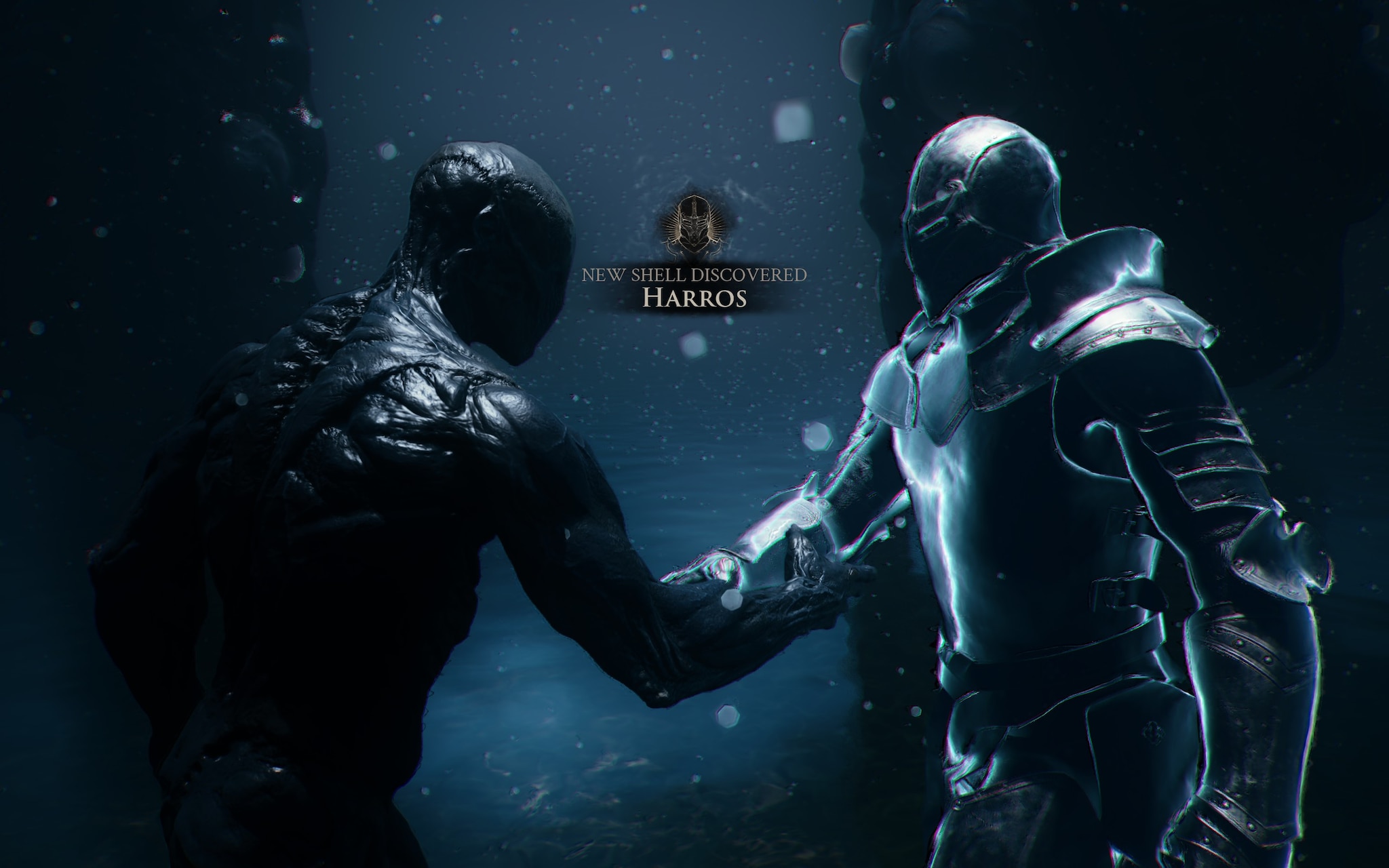
The Shell memories are much more interesting. Each body once belonged to a warrior with personal failures, beliefs and ambitions. Unlocking their memories gradually reveals who they were before death, giving these otherwise silent classes a proper history. These stories are short, but they provide some of the game’s most memorable narrative moments.
Fallgrim itself has been transformed into a massive interconnected world. It is nowhere near the scale of Elden Ring, but it feels larger than the first game without becoming filled with meaningless empty space. Different paths lead through poisoned swamps, ruined settlements, enormous castles and grotesque structures built from the remains of supernatural beings.
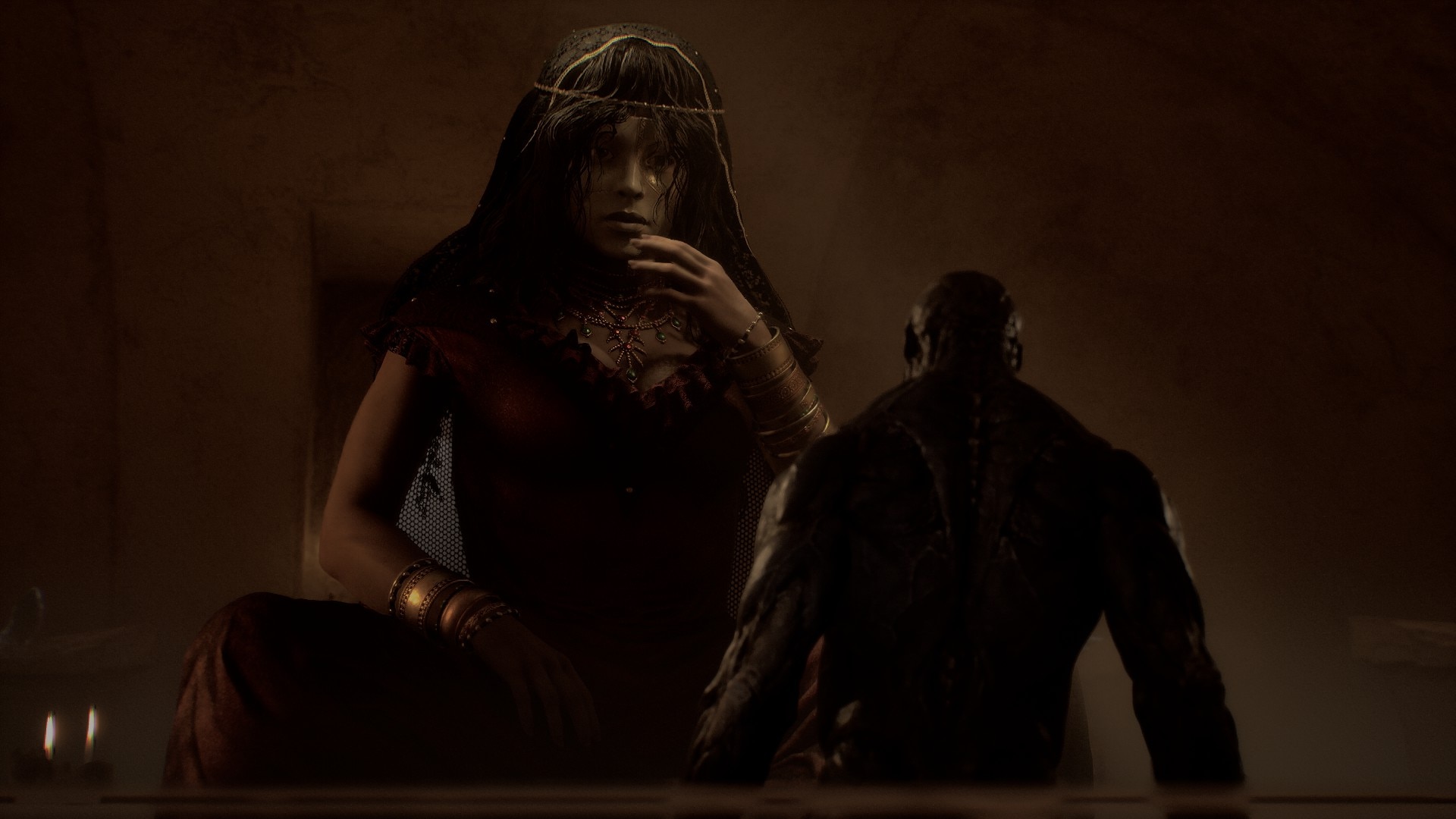
Exploration is one of Mortal Shell II’s greatest strengths. Entire Shells, weapons, Sidearms and abilities are hidden away rather than automatically handed to you. Finding a concealed entrance can therefore completely change your build instead of rewarding you with another disposable crafting material.
More than 60 dungeons are scattered across the world. Some contain environmental puzzles or unusual mechanics, while others culminate in minibosses guarding valuable equipment. The larger domains beyond corrupted gates are particularly impressive, operating almost like complete levels with their own checkpoints, enemies and major bosses.
Unfortunately, the smaller dungeons eventually begin to follow a familiar pattern. You enter through a wall of mist, descend deeper underground, fight through several rooms, collect an item and teleport back to the entrance. Their decorations and challenges change, but the underlying structure becomes repetitive.
Beacons serve as checkpoints where you can rest, level up and change equipment. They are frequently placed far apart, creating genuine tension when your healing supplies are running low and you have accumulated a large amount of Gloom. Reaching a new Beacon can be enormously satisfying, but dying often means repeating a lengthy journey through enemies you already defeated. The vague map and shortage of recognisable landmarks make these runbacks even more frustrating.
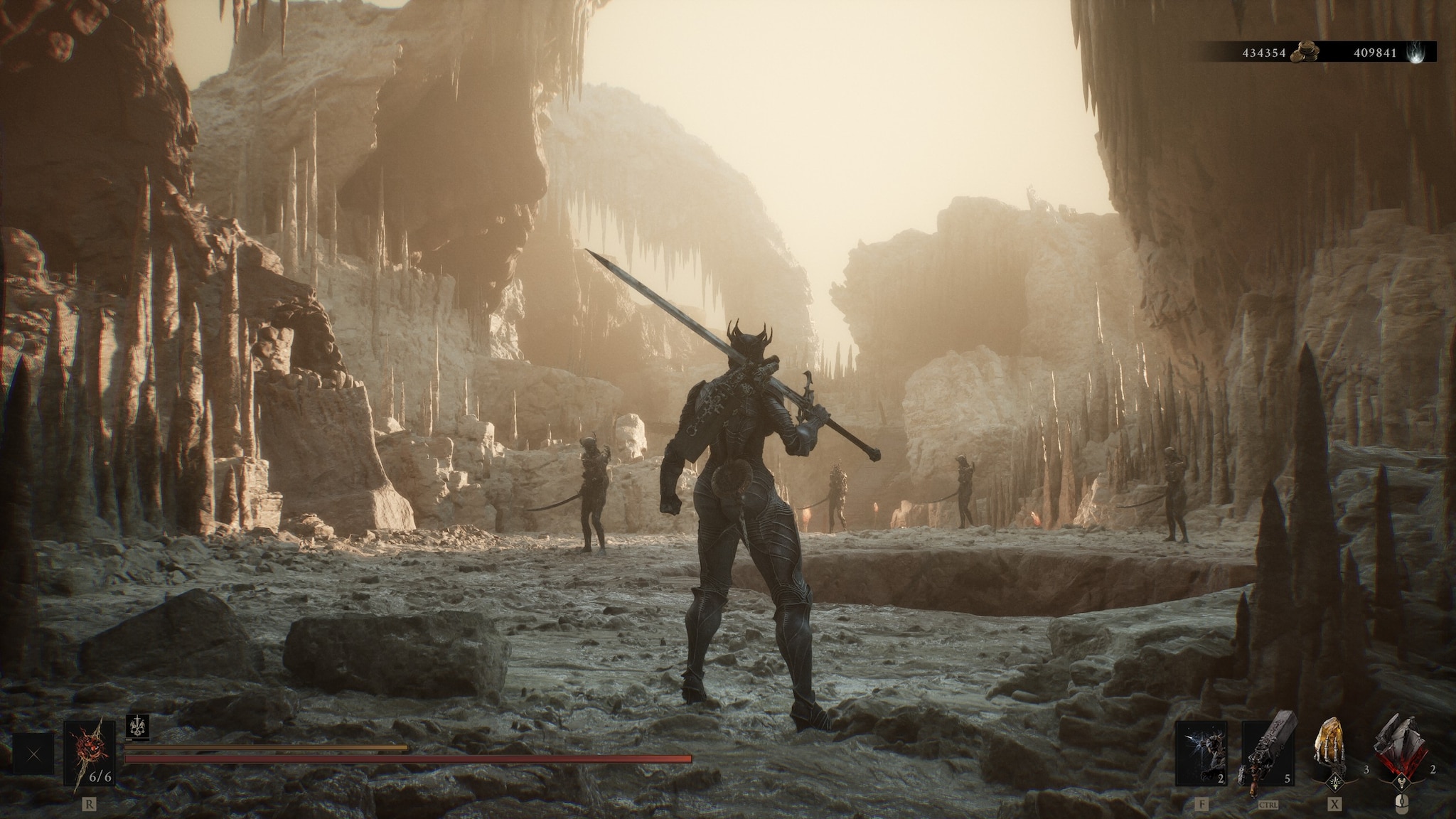
The largest mechanical change is the complete removal of stamina. Attacking, sprinting and dodging no longer consume a limited resource, allowing combat to move considerably faster than in the original. This could have reduced every encounter to mindless attack spam, but high enemy damage and the new Break system prevent reckless aggression from becoming completely reliable.
Perfectly timed defensive actions fill an enemy’s Break meter. Once it is depleted, the opponent becomes vulnerable to a devastating Riposte. Different Seals determine your defensive options, including blocking, parrying and the returning Harden ability, which temporarily turns your body into stone and absorbs an incoming strike.
Successful attacks also generate Resolve, which powers Shell abilities, weapon techniques and ranged Sidearms. Aggression therefore feeds directly into your strongest options. Retreating keeps you alive, but continuing to fight gives you the resources required to control the encounter.
Losing all your health ejects the Harbinger from its current Shell. You are considerably more vulnerable in this state, but landing enough attacks charges the ability to reclaim the body with some health restored. Turning a near-defeat into a comeback feels fantastic and further encourages you to keep fighting when another game would tell you to retreat.
These mechanics work brilliantly against individual opponents and most bosses. Problems appear when several enemies attack simultaneously. Harden may stop one strike, only for another enemy to hit you during the counterattack. Narrow rooms also make it easy to become trapped between aggressive opponents and an uncooperative camera. The combat system is clearly at its best during focused duels.
The eight playable Shells function as proper classes rather than minor stat variations. Tiel uses stealth and perfect dodges to perform powerful surprise attacks, while Eredrim specialises in breaking enemy posture and executing weakened targets. Proxima can pull enemies towards her with a hook, Lazlo relies on heavy armour and Gragu replaces conventional healing with hearts replenished by killing enemies. The more unusual Shells can stop time, summon copies or convert incoming damage into recoverable health.
Each Shell contains a compact skill tree, elemental resistances and several tiers of memories. Shell Points can be freely refunded and redistributed, making it easy to adjust abilities when changing bodies. Glimpses are required to unlock the deeper Bond tiers, however, and they are much scarcer. As a result, you cannot fully develop every Shell during a single playthrough.
That limitation becomes frustrating when an appealing Shell appears late in the adventure. You may have the freedom to redistribute skill points, but previously spent Glimpses cannot simply be moved with them. Weapon materials are similarly restrictive, encouraging you to commit to one favourite before experimenting with everything available.
There are eight melee weapons and another eight Sidearms, ranging from axes and enormous blades to crossbows, firearms and a combat lute capable of turning enemies against one another. Tarstones expand them further by adding elemental infusions, special attacks, critical bonuses and passive effects. Combining Shell abilities, equipment and ten Tarstone slots produces an impressive amount of build variety without drowning the player in meaningless statistics.
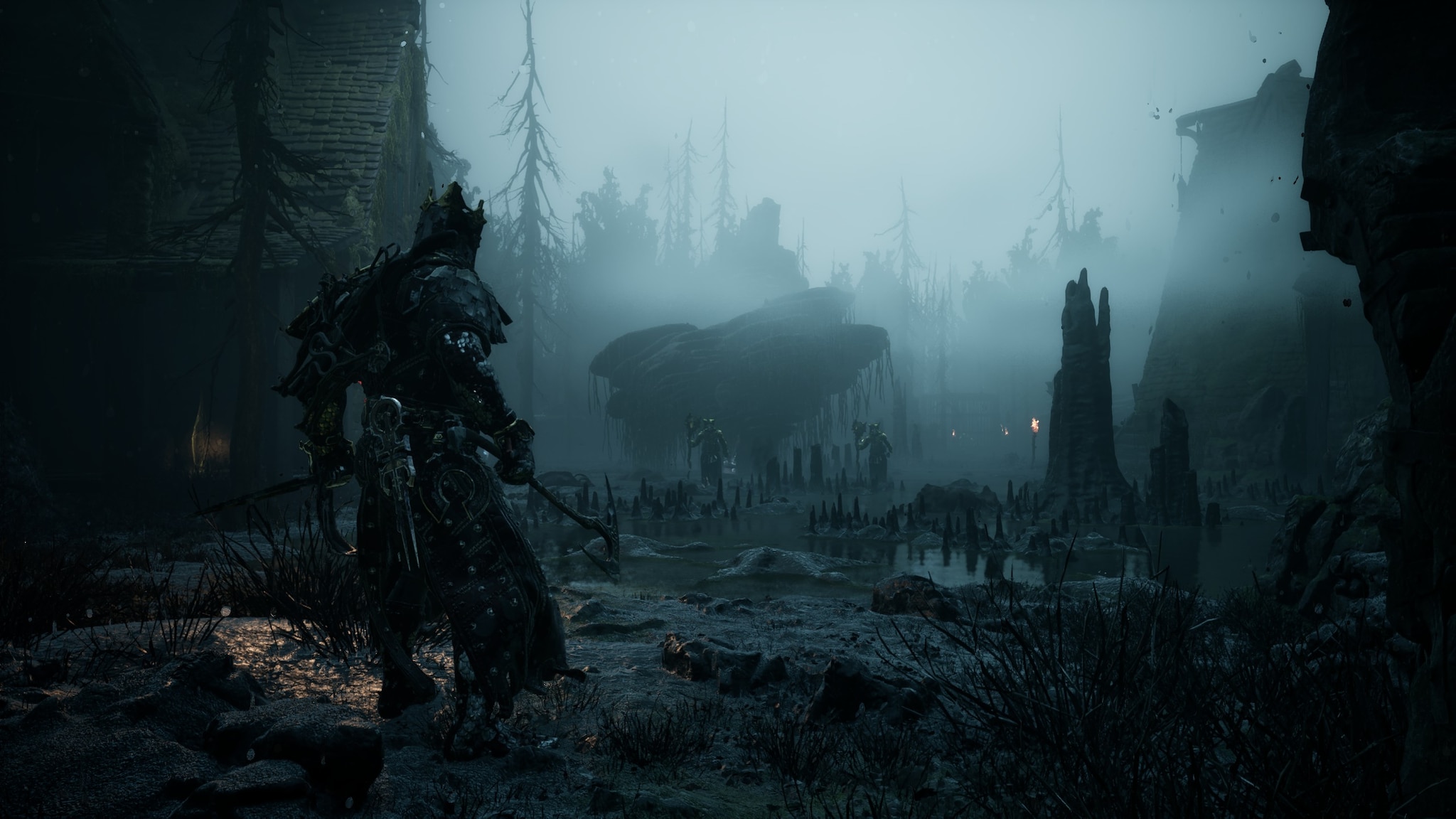
The enemy designs perfectly complement the filthy dark-fantasy world. Armoured fanatics, deformed knights, flesh-covered creatures and enormous abominations give the game the appearance of a heavy-metal album brought to life. Combat is violent and wonderfully crunchy, with forceful sound effects accompanying executions and dismemberment.
Despite their strong appearance, regular enemies are reused too frequently, and their limited attack patterns become predictable by the middle of the game. Bosses are generally far more successful. They feature grotesque designs, readable attacks and enough mechanical variety to test different parts of your build.
Breaking their posture and landing a Riposte remains satisfying, although several rely too heavily on unblockable attacks. Powerful Tarstone combinations can also destroy certain bosses before their mechanics have time to develop. The opening hours had me convinced that Mortal Shell II could become one of my favourite Soulslikes.
Its first regions are challenging without feeling unreasonable, exploration consistently produces worthwhile rewards and every newly unlocked ability makes your Shell noticeably more capable. That rhythm begins falling apart during the second half. Familiar enemies suddenly survive longer, resist interruption and kill you in only a few attacks, despite behaving almost identically to their earlier versions.
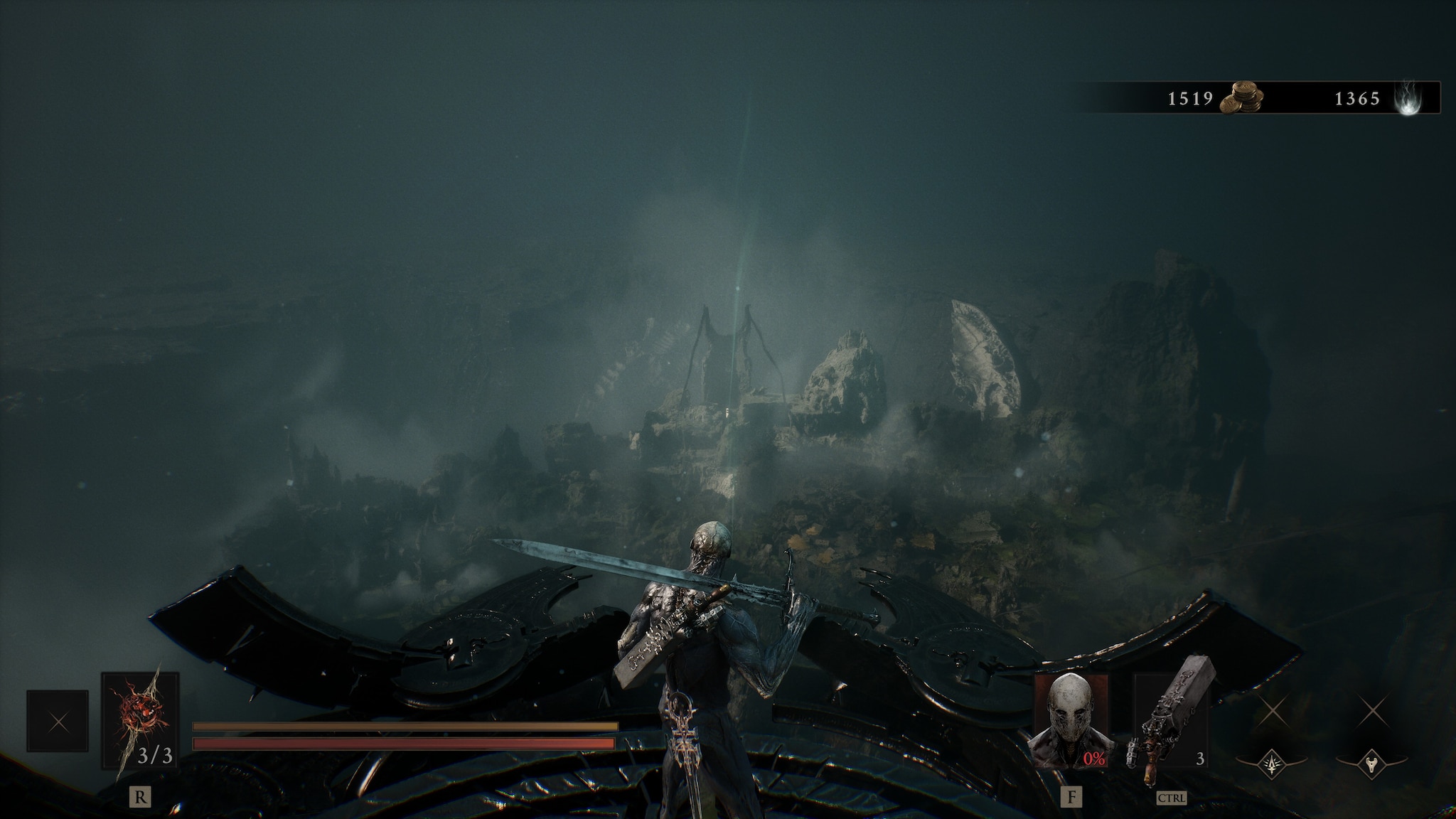
Even so, those weaknesses do not erase how much the studio has accomplished. Combat is faster and more flexible, exploration regularly delivers worthwhile discoveries and the expanded Shell system gives the game an identity beyond simply imitating Dark Souls. Even when frustration begins creeping in, there is usually another strange dungeon, horrifying boss or promising build waiting nearby.
Anyone who enjoyed the ideas behind the original should consider Mortal Shell II worthwhile pick. Soulslike veterans will recognise many familiar structures, but the stamina-free combat and extensive Shell customisation provide enough personality to make Fallgrim worth exploring. It may still be rough around the edges, but Cold Symmetry has finally created the game that Mortal Shell always threatened to become.
Mortal Shell II begins as an exceptional Soulslike filled with rewarding exploration, satisfying combat and exciting progression. Its repetitive enemies, uneven balancing and exhausting later regions prevent it from maintaining that quality, but they never completely erase what makes the adventure so compelling. Despite finishing the game more frustrated than I expected, I still consider it a substantial improvement over the original and an experience worth recommending.
Ending Thoughts
Review copy provided by the publisher
After more than three decades of limited availability, Terranigma is returning in 2027. We played its enhanced re-release at Gamescom…
Reading another person’s mind is often presented as a desirable superpower, but Sister Other Paranoia immediately understands why it could…
Forsaken Realms: Vahrin’s Call is exactly the kind of ambitious, slightly clumsy fantasy RPG that used to be far more…
![[Early Access] 2nd EVE – Sci-Fi Action RPG That Lacks a Sense of Stakes](https://www.indie-games.eu/wp-content/uploads/2026/08/2ND-EVE-1024x576.jpg)
2nd Eve is a space-set action RPG in which we strive to save humanity.
![[PREVIEW] Dreamcards – Strategic Exploration of Consciousness](https://www.indie-games.eu/wp-content/uploads/2026/08/Dreamcards_20260810_233631_0000-1024x576.jpg)
Dreamcards is a roguelike deckbuilder centered around dreams and nightmares.
![[Early Access] OFFBEAT – Incredibly Fun Way to Start a Music Career](https://www.indie-games.eu/wp-content/uploads/2026/08/Offbeat_20260808_201446_0000-1024x576.jpg)
In OFFBEAT, we play the role of a jobbing composer who is launching their music career.
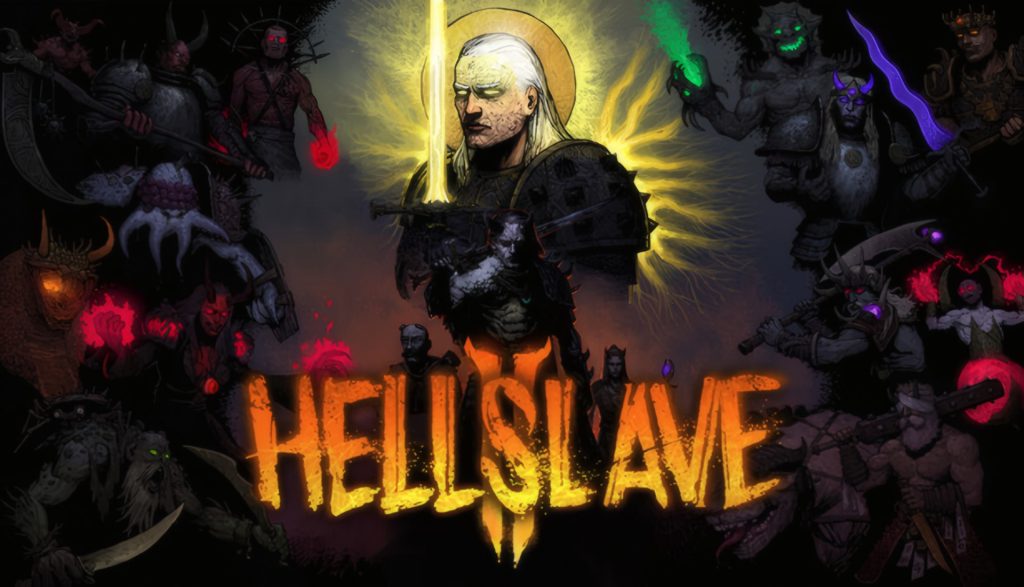
HellSlave II retains the original’s oppressive atmosphere, morally grey world and striking art while adding a larger world, randomized loot…
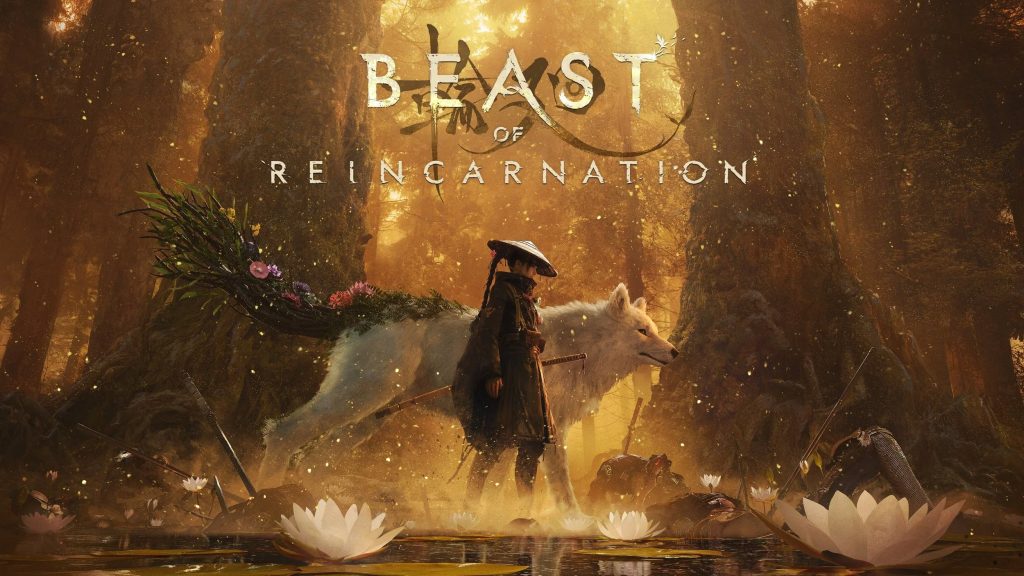
Beast of Reincarnation is an ambitious but uneven action RPG elevated by satisfying parry combat, beautiful art direction and the…

K-pop Idol Stories: Road to Debut captures the pressure of building idol group, but its management systems never explore that…
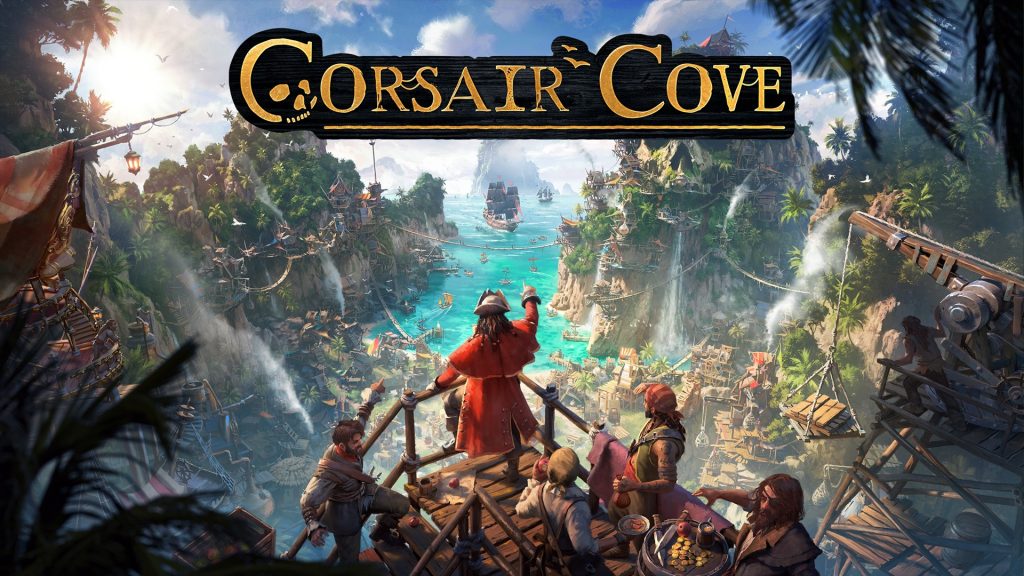
Hooded Horse keeps finding strategy games that know their audience, and Corsair Cove extends its impressive run of excellent city-builders.
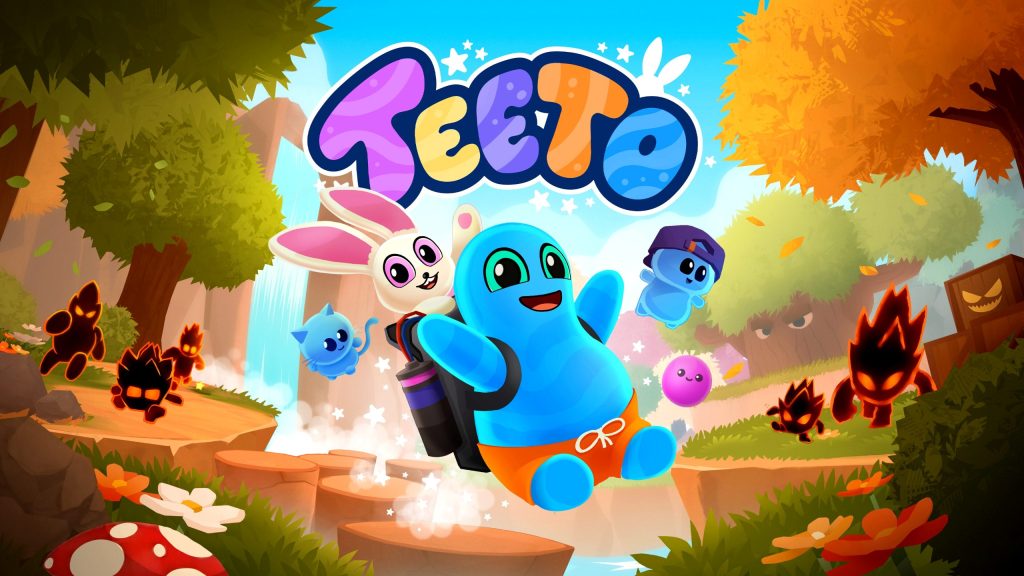
Teeto is a warm, cozy, creative and highly enjoyable 3D platformer that understands why classic collectathons remain so appealing.
Turnip Mountain stands out for its combination of a unique control system and a minimalist approach.
Dystopicon is an imaginative and memorable narrative experiment with sharp social commentary, engaging world-building and several wonderfully absurd scenarios.
Maneki Mania is an incremental game centered around petting a lucky cat.
XeGrader Plus delivers colorful retro shooting, but basic mechanics, a short campaign and paid retro modes make its €20 price…
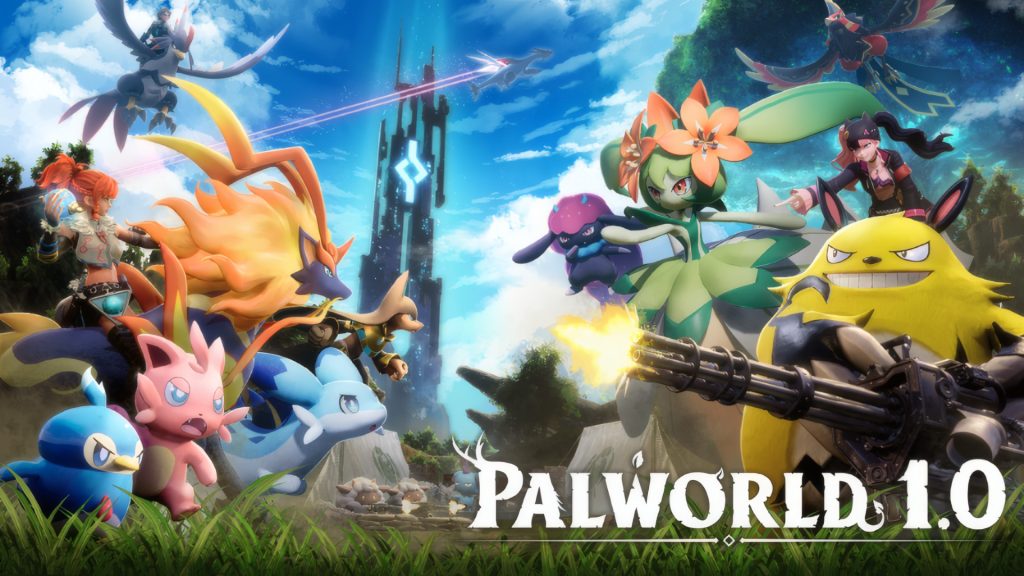
It has been roughly two and a half years since Palworld first entered Early Access, and quite a lot has…
![[EARLY ACCESS] The Last Caretaker – Survival Game I Cannot Stop Playing](https://www.indie-games.eu/wp-content/uploads/2026/07/The-last-Caretaker-Key-Art-1024x587.jpg)
The Last Caretaker is a compelling survival crafter with a flooded world and mobile base, but weak combat and performance…
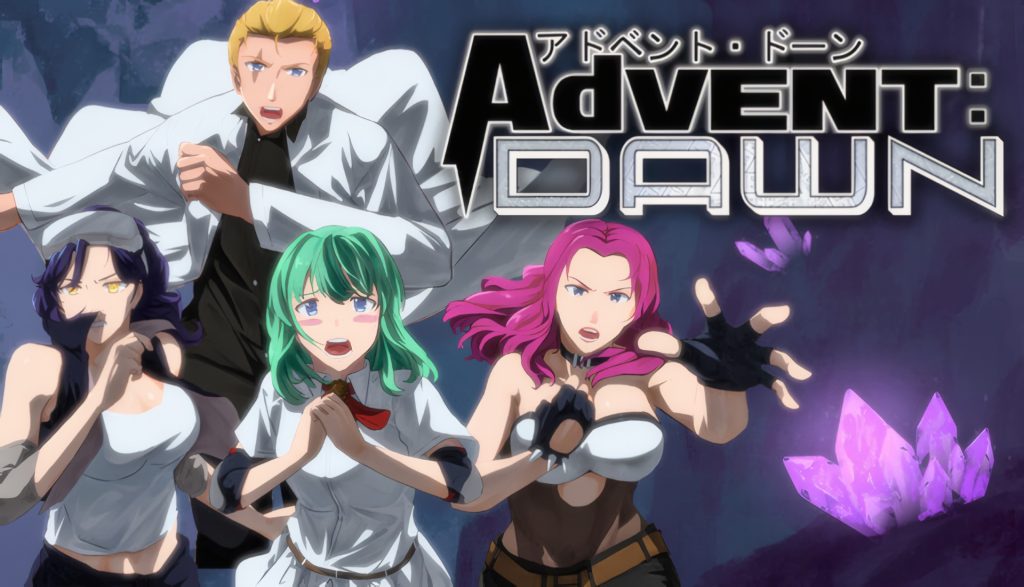
Advent: Dawn is an intriguing science-fiction visual novel elevated by a likable cast and one of the most convenient flowchart…
![[EARLY ACCESS] Hell Maiden – Beautiful but Uneven Journey Through Hell](https://www.indie-games.eu/wp-content/uploads/2025/06/HMD_screenshot_019-1024x576.jpg)
Bullet heaven and rougelite game Hell Maiden lands between a polished Early Access release and a promising game that still…
![[PREVIEW] Dark Queen of Samobor – Promising Croatian Adventure Still in Need of Polish](https://www.indie-games.eu/wp-content/uploads/2026/07/Dark-Queen-of-Samobor-1024x587.jpg)
Dark Queen of Samobor is a promising 2.5D side-scrolling action-adventure that combines Croatian folklore with combat, puzzles and cinematic platforming.
