Duskfade – The PS2 Era Returns With All Its Strengths and Weaknesses
Duskfade is worth considering for players who miss colourful PS2-style action-platformers and can tolerate basic combat, floaty movement and backtracking.


If you enjoy independent indie game coverage, consider supporting Indie-Games.eu on Patreon. It helps keep the site independent.
We often praise indie games in theory, yet in practice we don’t value them enough – celebrating innovation while stubbornly returning to familiar formulas. That’s precisely why ANTHEM#9 serves as a reminder of how important the indie scene truly is: it dares to take risks and combine genres that rarely meet into something that feels genuinely unique.
On paper, the mix of roguelite, deckbuilder, and time-limited gem matching sounds chaotic. In practice, however, it results in a surprisingly coherent, challenging, and entertaining experience. Everything is further rounded out by a strong anime aesthetic, clearly inspired by the style we associate with the Persona series.
You play as an agent of the organization Anthem#9, a secret group tasked with maintaining balance in the world by eliminating threats that disrupt it. The story is intentionally restrained. There are no lengthy cutscenes or extensive explanations; the world is built through short mission descriptions, notes, and occasional interactions. The narrative serves mainly as a framework for the action, with the plot taking a back seat.
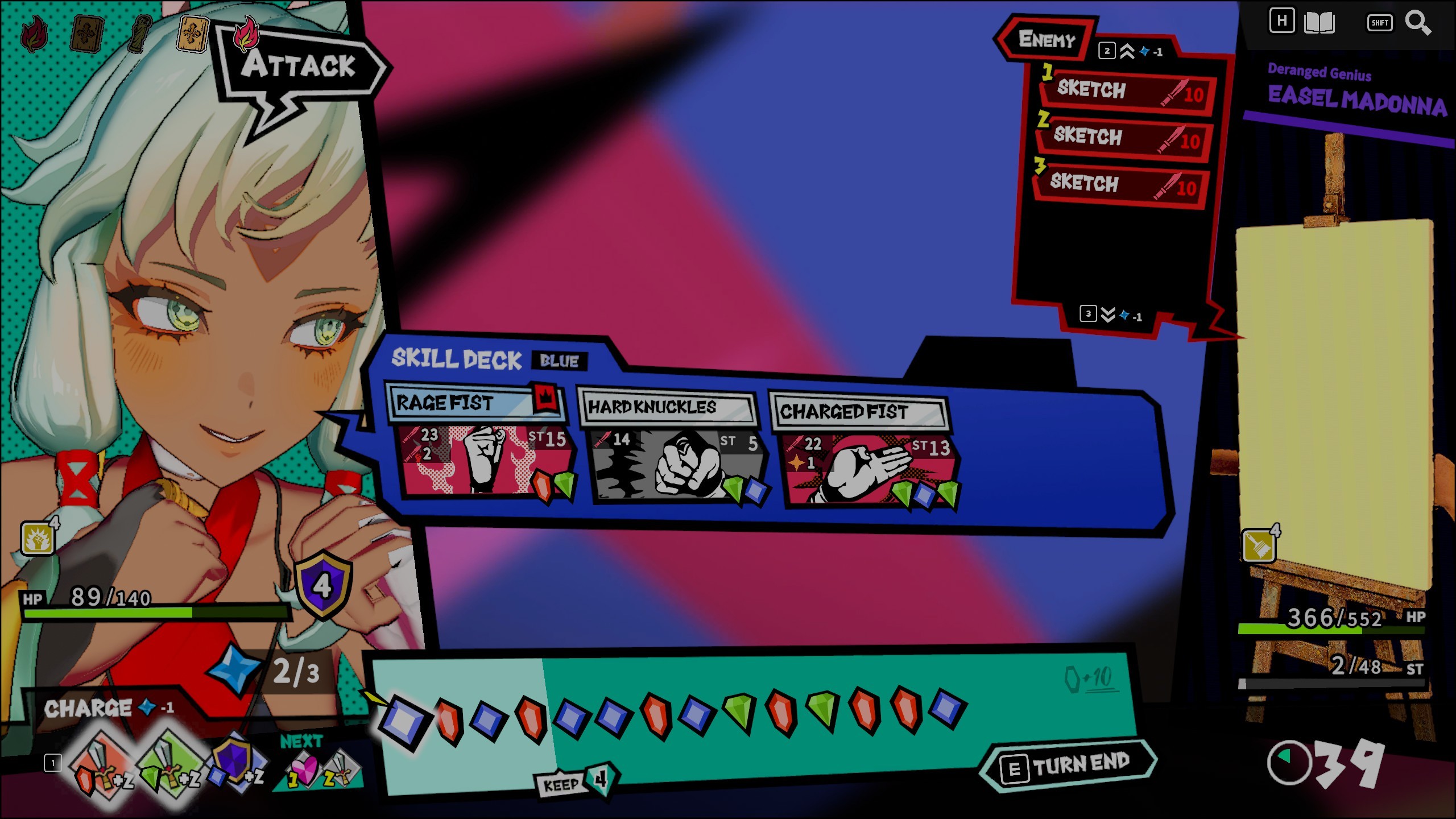
Where ANTHEM#9 truly shines is in its one-on-one battles, built around a clever combination of card activation and gem matching. At the top of the screen are attack cards, each requiring a specific color combination to activate. At the bottom, at the start of each turn, a random set of gems appears along with a strictly limited time to decide your move.
The goal isn’t simply to clear the entire gem board, but to thoughtfully assemble combinations in order to activate abilities in the optimal sequence. In other words, every decision carries weight. You can spend all your gems in one explosive turn or save them for a stronger combo in the next round. This is where the puzzle elements come into play, as each gem has its own color. For example, one card may require a blue and red gem, while another needs red and green, meaning the same red gem can serve as a bridge to reach green and activate a new card.
It’s precisely through these overlaps that room for countless combinations emerges: with careful planning, you can chain effects together, and as you progress, cards requiring larger numbers of gems appear. With proper preparation, you can activate them simultaneously to create powerful, synergistic turns. Between encounters, you choose paths leading to shops, events, or new battles, strategically shaping the development of each run.

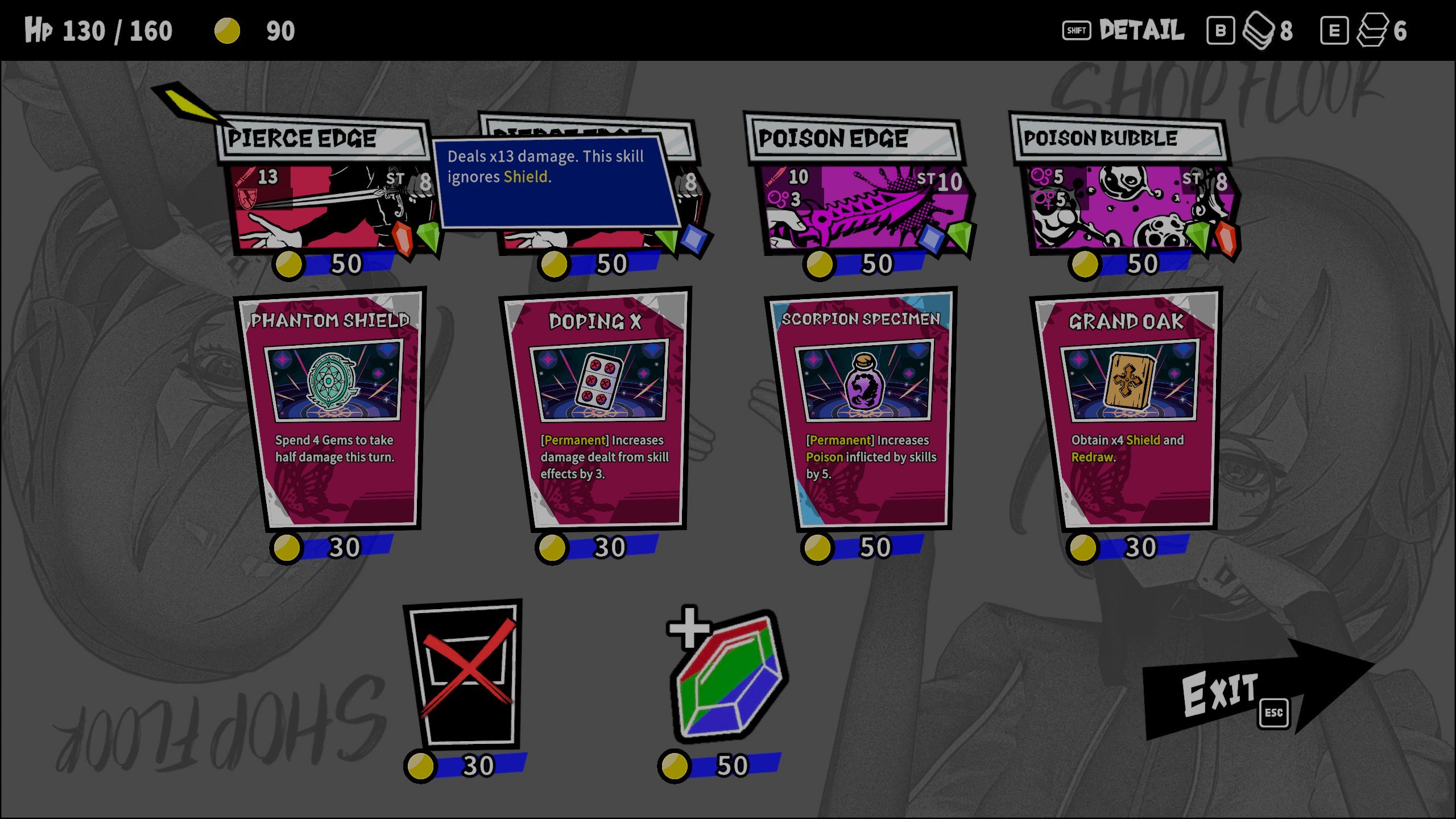
It’s worth emphasizing that you manage two decks that rotate each turn, each consisting of three cards that you can replace or upgrade. Instead of stacking dozens of cards, the game forces you to stay focused, carefully selecting cards and thinking through your strategy. For example, an upgraded card may trigger multiple times, while another might better complement a specific deck build.
Additional depth comes from the ST meter. By depleting it, you can interrupt enemy attacks and avoid damage or negative effects. Unfortunately, not all enemies can be stopped, especially bosses. They have large health pools, hit harder, and possess special abilities that can disrupt your plans, such as changing gem colors at the start of your turn.
ANTHEM#9 features three main characters, each with a unique playstyle and mechanics, accompanied by varied missions and diverse bosses. The structure is clearly defined: a mini-boss awaits at the end of the first level, followed by the main boss on the second, keeping runs dynamic, time-focused, and free from unnecessary padding.
Rubit, the character you start with, is flexible and allows you to change gem colors while revolving around applying poison to enemies. Phannie leans toward a riskier approach, relying on large quantities of gems and potentially devastating combinations where linked gems can be separated. Beni, on the other hand, requires you to utilize her buff mechanic, when you destroy a gem, special effects trigger, such as gaining a shield, healing, or dealing increased damage. Blessings further deepen each character’s tactics. At the start of a turn, you choose one that grants passive bonuses, gem manipulation, direct attacks, and other effects.
Despite all its strengths, the time limit will likely divide players. Around forty seconds per turn injects adrenaline and focus, but it can also feel stressful, as there isn’t much time to think. There are also minor flaws. The interface can occasionally feel cluttered, and the learning curve is steeper than in typical puzzle games. Some players might wish for more cosmetic unlocks or additional character variations. Ultimately, these are small details that don’t significantly affect the core gameplay, but you should be aware that ANTHEM#9 will challenge you until you fully understand how everything works and how to properly manipulate the gems.
In the end, ANTHEM#9 proves that genre-blending isn’t just about experimentation, it’s about consistent and thoughtful execution. The fusion of roguelite progression, precise deckbuilding, and time-limited gem matching creates a tense and engaging gameplay loop. It may not be the most accessible title for those unfamiliar with these genres, but for those willing to commit, it offers something rare: the feeling of playing a roguelite that truly dares to be different.
Review copy provided by the publisher
Duskfade is worth considering for players who miss colourful PS2-style action-platformers and can tolerate basic combat, floaty movement and backtracking.

Man I Just Wanna Go Home is a noir crime story with visuals from MS Paint and life-or-death choices.
![[GAMESCOM 2026] Vikings Dynasty Preview – Expands the Dynasty Formula](https://www.indie-games.eu/wp-content/uploads/2026/09/Viking-Dynasty-09-21-26-2-1024x576.jpg)
After showing me Prospera at Gamescom 2026, Toplitz Productions' Mathias Oertel moved to a very different kind of settlement builder.…
![[GAMESCOM 2026] Prospera Preview – Production, Prosperity and Victorian Industry](https://www.indie-games.eu/wp-content/uploads/2026/09/Prospera-09-21-26-5-1024x576.jpg)
At Gamescom 2026, I met with Toplitz Productions' Mathias Oertel for a guided presentation of two upcoming games. One of…
Golden Swirl inventive card combat carries the experience, but repetitive rooms, weak upgrades and excessive dialogue hold it back.
![[GAMESCOM 2026] Wilderdark Preview – Ambitious Dinosaur Horror Game That Still Has Plenty to Prove](https://www.indie-games.eu/wp-content/uploads/2026/09/Wilderdark-1024x576.jpg)
Dinosaur survival horror game Wilderdark has one of those premises that immediately makes you wonder why more games have not…
![[PREVIEW] Tiny Metal 2 – Strategy Game That Wants You to Learn From Every Mistake](https://www.indie-games.eu/wp-content/uploads/2026/09/Tiny-Metal-2-1024x576.jpg)
I rarely enjoy discovering that my opening strategy was completely wrong, but Tiny Metal 2 made that process one of…
![[PREVIEW] Remothered: Red Nun’s Legacy – Ambitious Survival Horror That Needs More Polish](https://www.indie-games.eu/wp-content/uploads/2026/09/Remothered-Red-Nuns-Legacy-4-1024x576.jpg)
Remothered: Red Nun’s Legacy has a gripping atmosphere and promising survival tools, but its repetitive hiding and rough visuals need…
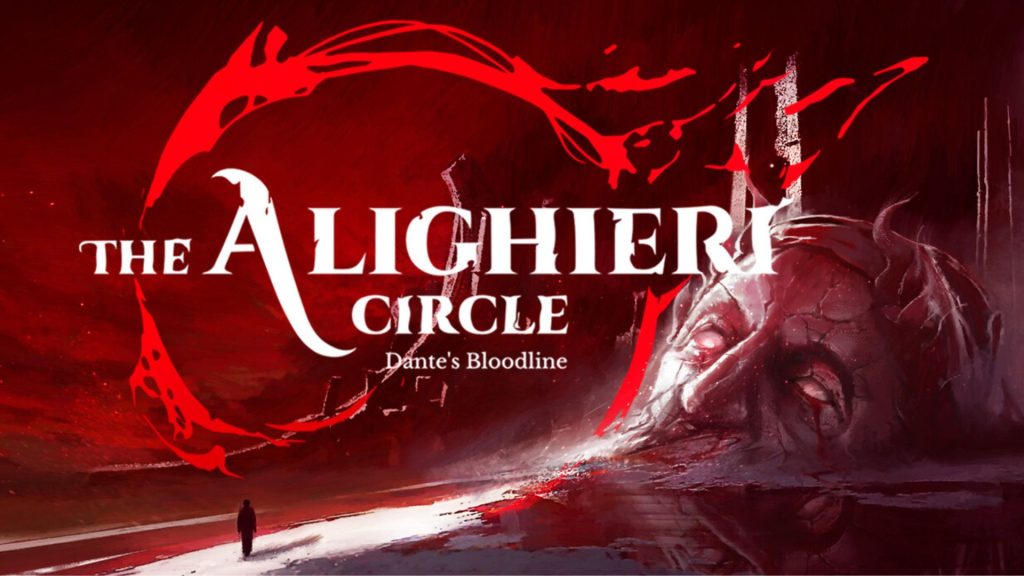
The Alighieri Circle: Dante’s Bloodline is difficult to recommend beyond players who are especially interested in Dante or enjoy solving…
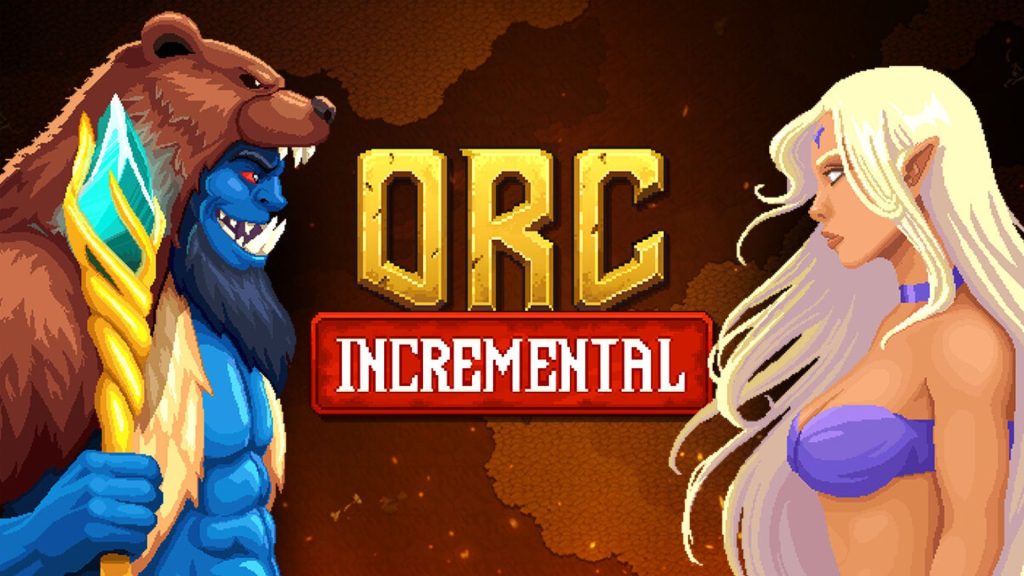
Orc Incremental offers satisfying progression, entertaining totem combinations and enough content to justify its affordable price.
![[GAMESCOM 2026] Chronoscript: The Endless End Preview – Beautiful Pages Hide Deliberate Combat](https://www.indie-games.eu/wp-content/uploads/2026/09/Chronoscript-The-Endless-End-1-1024x576.jpg)
Chronoscript: The Endless End stands out from other Metroidvanias by blending 2D manuscript worlds with exploration inside a 3D manor.
![[GAMESCOM 2026] MegaGum Preview – Combat Hits Hard in This Sticky Platforming Adventure](https://www.indie-games.eu/wp-content/uploads/2026/09/MegaGum-09-09-26-5-1024x576.jpg)
MegaGum combines hard-hitting combat, varied weapons and Gum-powered platforming in a promising Gamescom 2026 demo.
![[GAMESCOM 2026] Delphinium Preview – Cozy Routine Mixed With Enjoyable Minigames](https://www.indie-games.eu/wp-content/uploads/2026/03/Delphinium--1024x665.jpg)
Delphinium mixes cozy farming, exploration and relationships with enjoyable fishing, cooking and forging minigames in its Gamescom 2026 demo.
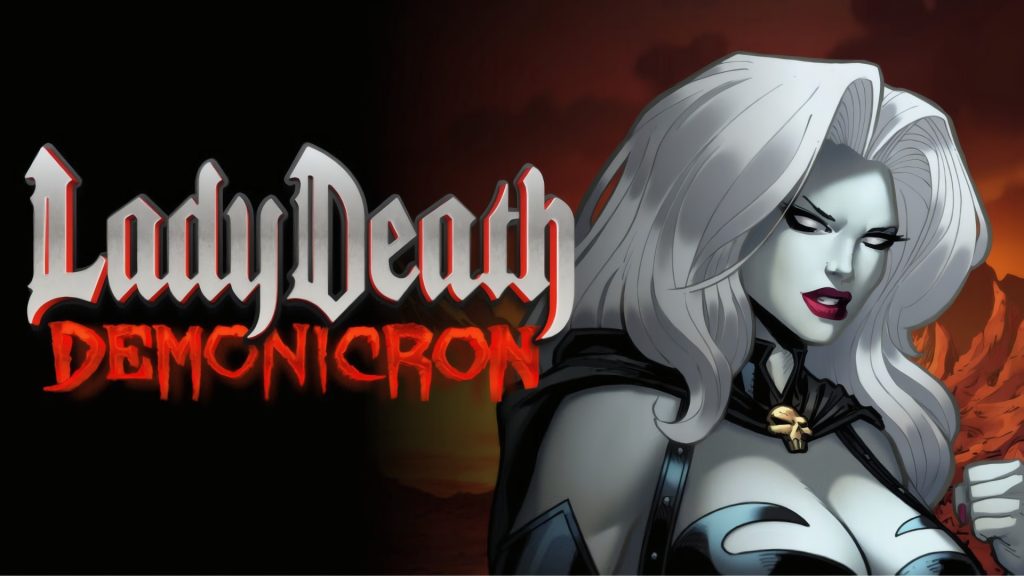
Lady Death: Demonicron looks the part, but underneath its excellent comic-book exterior is a clunky and painfully short brawler.
![[GAMESCOM 2026] Tomb Raider: Legacy of Atlantis Preview – Expands the Original Without Losing Its Identity](https://www.indie-games.eu/wp-content/uploads/2026/09/tomb-raider-legacy-of-atlantis-06-02-26-1-1024x576.jpg)
Tomb Raider: Legacy of Atlantis brings Lara back to her roots, but its Gamescom 2026 showing proved this is far…
![[GAMESCOM 2026] Clive Barker’s Hellraiser: Revival Preview – Ready to Open the Box](https://www.indie-games.eu/wp-content/uploads/2026/09/Clive-Barkers-Hellraiser-Revival-08-30-26-1-1024x576.jpg)
Hellraiser: Revival preserves the franchise’s sex, gore and psychological horror while delivering approachable survival-horror gameplay.

Swan Song creates a peaceful and forgiving puzzle space without removing the challenge that makes solving a difficult puzzle rewarding.
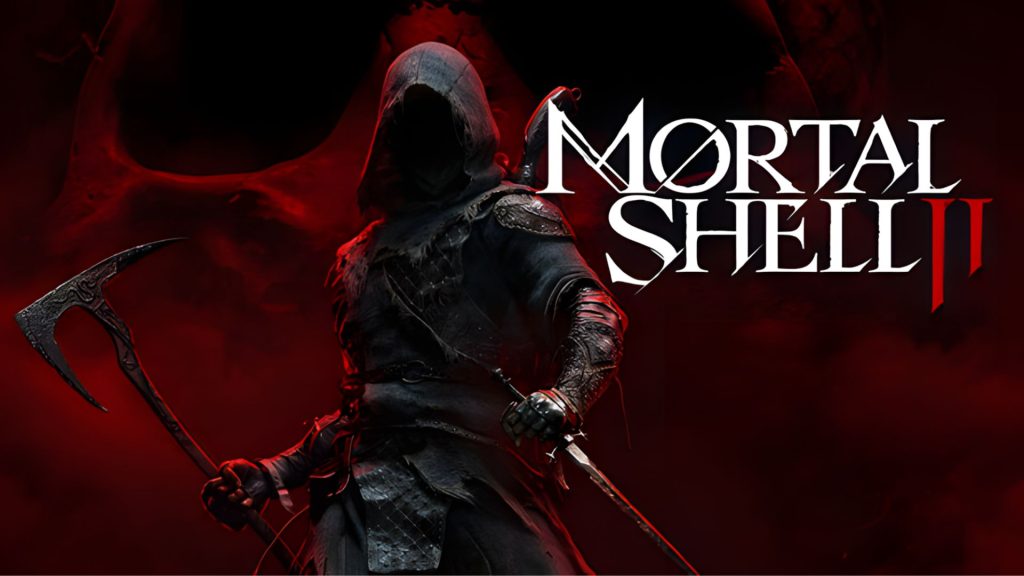
Mortal Shell II starts brilliantly but grows repetitive and exhausting, while remaining a rewarding and ambitious Soulslike sequel.
![[GAMESCOM 2026] Terranigma Preview – A Lost SNES Classic Returns in 2027](https://www.indie-games.eu/wp-content/uploads/2026/08/Terranigma-1-1024x576.jpg)
After more than three decades of limited availability, Terranigma is returning in 2027. We played its enhanced re-release at Gamescom…
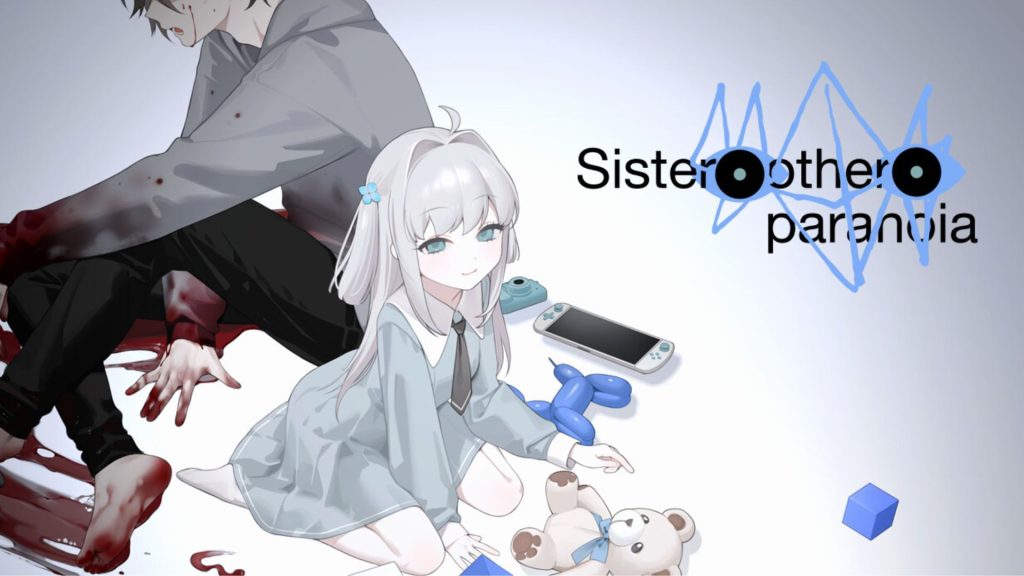
Reading another person’s mind is often presented as a desirable superpower, but Sister Other Paranoia immediately understands why it could…
